
/
Imagine opening your mailbox to find a check from the government – not because of a crisis, but as a reward for a booming economy. That’s the tantalizing promise President Donald Trump dangled this weekend, sparking excitement, skepticism, and a flurry of debate across the nation. With tariffs bringing in billions and the stock market soaring, Trump is pitching a direct payout to most folks, framing it as a well-deserved “dividend” from America’s trade triumphs. But is this a game-changer for your wallet, or just political smoke? Let’s break it down step by step, backed by the numbers and history, right up to the latest buzz as of November 10, 2025.
The Announcement That Turned Heads
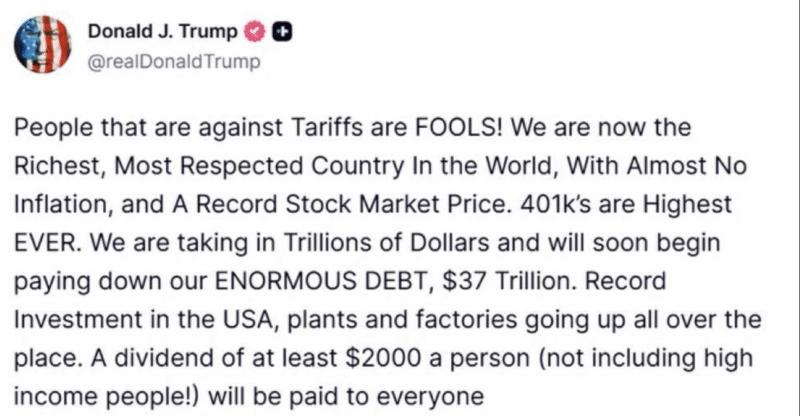
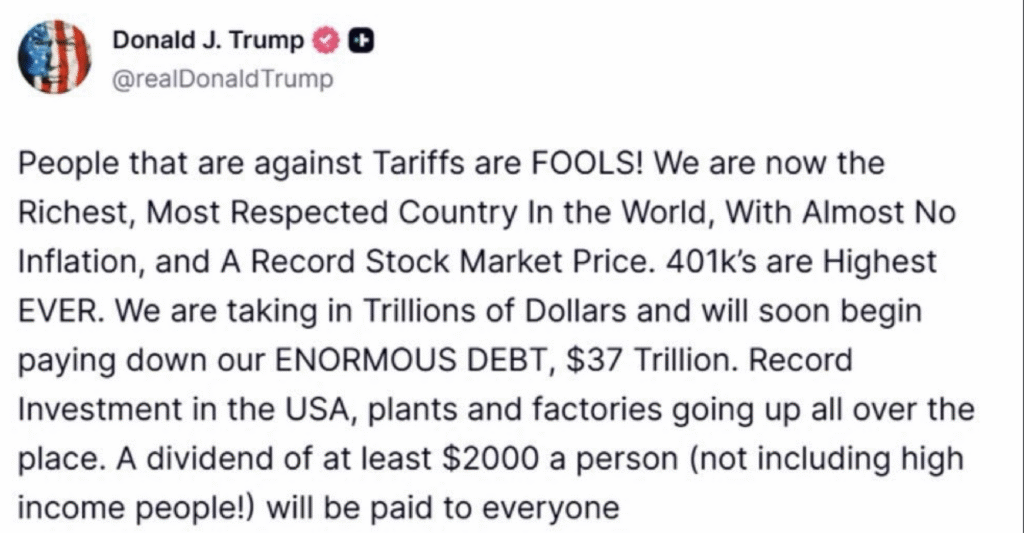
President Trump kicked off the conversation bright and early on Sunday, November 9, 2025, via his Truth Social account. In a fiery post, he blasted critics of his tariff policies as misguided, while celebrating the influx of cash from import taxes. “We’ve got trillions pouring in,” he boasted, highlighting low inflation, record-high 401(k)s, and a thriving stock market. The kicker? A pledge to distribute at least $2,000 to nearly every American, excluding those in the upper income brackets. It’s not the first time he’s teased this – back in October 2025, during an interview on One America News, he hinted at payouts between $1,000 and $2,000 as a way to share the wealth while tackling the national debt, which now hovers around $38 trillion.This comes hot on the heels of the Supreme Court’s review last week of Trump’s expansive use of the International Emergency Economic Powers Act (IEEPA) to impose tariffs. Justices voiced doubts about the broad interpretation, but the White House stood firm, arguing it’s essential for rebalancing global trade.
Who Qualifies? Breaking Down the Details
Trump’s vision is straightforward: “Everyone” gets a slice, except the wealthy. But details are still fuzzy – no clear income cutoff has been set, and questions linger about whether kids or dependents qualify for their own shares. Drawing from history, this echoes the COVID-era stimulus rounds Trump signed off on in 2020. Back then, the first wave under the CARES Act dished out $1,200 per adult (up to $75,000 income for singles) plus $500 per child, while the second gave $600 each. All told, those payments reached over 476 million people, pumping $814 billion into the economy.If this dividend follows suit, it might phase out above certain thresholds, like $100,000 for individuals. Treasury Secretary Scott Bessent, in a November 9 appearance on ABC’s “This Week,” clarified he hadn’t discussed it directly with Trump yet but suggested the $2,000 could manifest through tax breaks rather than straight checks – think no taxes on tips, overtime, or Social Security benefits, or even deductible auto loans.
The Tariff Engine: Facts on the Revenue Boom
At the heart of this plan? Tariffs – taxes on imported goods that companies foot the bill for, often passing costs to consumers. Through September 2025, these have raked in $195 billion, a whopping 250% jump from the prior year, adding $118 billion extra. Over the next decade, projections from the Treasury peg the total at around $3 trillion. Bessent emphasized that the goal isn’t just revenue but fixing trade imbalances, bringing jobs back home, and shifting to domestic taxes long-term.Critics, however, point out the math might not add up. Erica York from the Tax Foundation estimates that if 150 million adults qualify (say, under $100,000 earners), the tab could hit $300 billion – potentially dwarfing current collections. And with average tariff rates at 18% (the highest since the Great Depression era), everyday prices for goods like electronics and clothing have crept up, per Yale Budget Lab data.
Echoes from the Past: Trump’s History with Payout Ideas
This isn’t Trump’s first rodeo with rebate talk. In July 2025, he floated similar checks from tariff funds. Earlier, in February, alongside Elon Musk (then advising on government efficiency via the short-lived DOGE initiative), they brainstormed a $5,000 dividend from supposed spending cuts – though that fizzled as deficits swelled instead. Republican Senator Josh Hawley even pushed a bill in early 2025 for $600 tariff rebates per person and child, calling it a lifeline after economic hits from prior policies.These nods build on Trump’s first-term actions, like the two stimulus packages he championed amid the pandemic, which helped stabilize families during lockdowns. Yet, as John Arnold of Arnold Ventures calculates, a full $2,000 rollout could balloon to $513 billion, raising eyebrows about fiscal responsibility.
Latest Buzz: What’s Unfolding as of November 10, 2025
As of today, November 10, the White House hasn’t released formal plans or sought congressional buy-in, which would likely be needed for such distributions. Bessent’s Sunday interview keeps the door open, framing it as part of broader tax relief already in motion. Meanwhile, social media is ablaze – posts on X highlight farmer bailouts tied to tariffs, with some calling the dividend a “bribe” amid rising costs. No new Trump statements have dropped since yesterday, but analysts warn it could fuel short-term inflation if it adds to consumer spending without offsetting cuts.Democrats, fresh off gains in last week’s state and local races where they hammered affordability issues, are poised to counter. Their campaigns spotlighted cost-of-living woes, potentially using this as ammo against what they see as gimmicky economics.
Emotional Touch: Hitting Home for Hardworking Families
Picture this: A single mom juggling two jobs, finally catching a break with an extra $2,000 to cover school supplies or that nagging car repair. Or a retiree on a fixed income, breathing easier without Social Security taxes biting into their check. Trump’s pitch taps into that raw hope – the idea that America’s resurgence should trickle down to the kitchen table, not just Wall Street. It’s a reminder of the American Dream’s promise: Work hard, play by the rules, and share in the prosperity. In a world of skyrocketing bills and uncertain futures, this could feel like a heartfelt thank-you from a leader who gets the grind. But will it deliver, or leave folks holding the bag for higher prices? That’s the emotional tug-of-war pulling at hearts nationwide.