
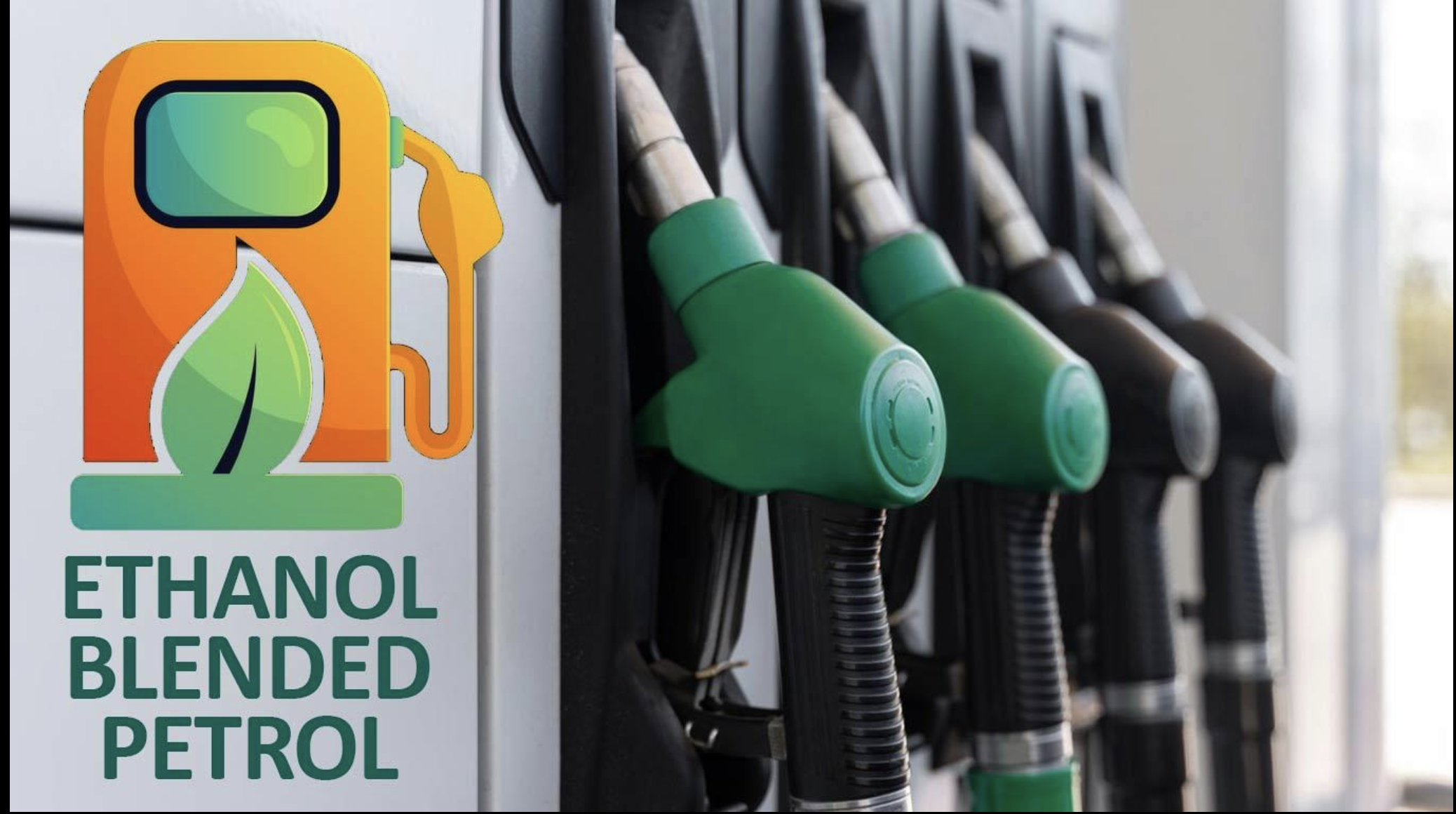


Why Ethanol Fuel in India Is Suddenly Everywhere
Ethanol fuel in India is no longer just a policy discussion or an environmental experiment. It is now a reality that directly affects what goes into your vehicle every time you stop at a petrol pump.
As of April 2026, E20 fuel (20% ethanol blended with petrol) has become mandatory across India. That means every petrol vehicle on the road today is already part of this transition, whether the owner realizes it or not.
But this shift did not happen overnight.
India’s ethanol journey is tied to a much bigger story:
rising crude oil prices, geopolitical risks, farmer income, and the country’s long-term goal of energy independence.
To understand why ethanol fuel in India is being pushed so aggressively, you need to look at the numbers.India’s ethanol production has reached 20 billion litres… (Source: Ministry of Petroleum & Natural Gas) Do follow : https://mopng.gov.in
Key Stats That Define Ethanol Fuel in India


- E20 (20% ethanol blend) → Mandatory nationwide from April 2026
- 20 billion litres → India’s ethanol production capacity
- ₹120 billion+ → Annual crude oil import bill
- ₹60–72 per litre → Ethanol supply price to oil companies
- ₹89 per litre → Break-even petrol cost during oil spikes
- 832 lakh metric tonnes CO₂ reduction → Achieved through blending
- 350+ million vehicles → Now using ethanol-blended fuel
- 225 million two-wheelers → Most sensitive to ethanol impact
These numbers tell a clear story: ethanol fuel in India is not just about sustainability. It is about economics, national security, and survival in a volatile energy market.
Why India Accelerated Ethanol Fuel Adoption
The turning point came in 2026 when global oil supply chains were disrupted.
A major geopolitical conflict affected oil movement through the Strait of Hormuz, pushing crude prices above $110 per barrel. For India, which imports most of its oil, this created immediate pressure.
Oil Marketing Companies (OMCs) began facing losses of around ₹14 per litre on petrol. At the same time, domestically produced ethanol was available at a significantly lower cost.
This price gap changed everything.
Ethanol fuel in India suddenly became:
- Cheaper than petrol
- Locally available
- Scalable using agriculture
What was once an environmental policy became an economic necessity.
What Ethanol Fuel in India Actually Means for You
For the average Indian, ethanol fuel in India shows up in very simple ways:
- Slightly lower mileage
- Cleaner emissions
- No change in daily usage for new vehicles
But under the surface, the system powering your vehicle is changing rapidly.
Ethanol behaves differently from petrol:
- It contains oxygen, which improves combustion
- It absorbs moisture, which can affect older engines
- It has lower energy density, meaning slightly higher consumption
This is why the impact varies depending on the type of vehicle.
The Hidden Layer: Ethanol Fuel in India and National Security


One of the most overlooked aspects of ethanol fuel in India is its connection to national security and defence logistics.
India is one of the largest military powers in the world, with tens of thousands of vehicles operating across diverse terrains. Fuel is not just an operational input. It is a strategic dependency.
How the Army Uses Fuel
- Most military vehicles run on diesel, not petrol
- Heavy trucks, tanks, and logistics carriers are diesel-based
- Petrol is mainly used in:
- Light utility vehicles
- Motorcycles
- Staff and patrol vehicles
This distinction is important.
The ethanol blending policy affects petrol only, which means the core military logistics chain remains stable for now.
Where Ethanol Fuel Still Impacts Defence
Even though diesel dominates, ethanol fuel in India still creates indirect challenges for the armed forces.
1. Light Vehicle Compatibility
Older petrol vehicles like:
- Gypsy
- Older jeeps
- Motorcycles
may face issues with E20 fuel, including:
- Reduced mileage
- Component wear
- Maintenance needs
2. Supply Chain Complexity
If multiple fuel types emerge (E20, E85), logistics become more complicated:
- Fuel differentiation becomes critical
- Risk of wrong fuel usage increases
- Storage and transport need adaptation
3. Strategic Advantage
On the positive side, ethanol fuel in India reduces reliance on imported oil.
This means:
- Less vulnerability to global conflicts
- More stable fuel availability during crises
- Stronger domestic supply chains
For a country that depends heavily on oil imports, this is a major advantage.
Why Ethanol Fuel in India Is a Double-Edged Sword
The transition is not without trade-offs.
Advantages
- Reduces crude oil imports
- Supports farmers
- Cuts emissions
- Improves energy security
Challenges
- Lower fuel efficiency
- Engine compatibility concerns
- Water-intensive crops like sugarcane
- Food vs fuel debate
This balance is what makes ethanol fuel in India such a complex but important shift.
The Bigger Picture: A System-Level Transformation
Ethanol fuel in India is not just about fuel. It is reshaping multiple sectors at once:
- Agriculture → Farmers supplying energy crops
- Automotive → Shift toward flex-fuel vehicles
- Energy → Reduced oil dependency
- Economy → Lower import burden
It is one of the few policies that touches every layer of the economy simultaneously.
Way Forward: What Comes Next for Ethanol Fuel in India


The future of ethanol fuel in India is already being shaped, and the next phase will be even more transformative.
1. Expansion Beyond E20
India is moving toward:
- E85 (85% ethanol)
- E100 (pure ethanol)
This will require:
- New vehicle technology
- Dedicated fuel infrastructure
2. Rise of Flex-Fuel Vehicles
Automakers are preparing vehicles that can run on multiple fuel blends.
These vehicles will:
- Automatically adjust engine settings
- Optimize performance for ethanol
- Reduce mileage loss
3. Infrastructure Investment
Fuel stations will need upgrades to handle:
- Multiple fuel types
- Corrosion-resistant systems
- Separate dispensing units
4. Sustainable Feedstock Shift
India will need to move toward:
- Agricultural waste (2G ethanol)
- Less water-intensive crops
This is critical to avoid long-term environmental stress.
5. Consumer Awareness
The success of ethanol fuel in India depends on users understanding:
- What fuel their vehicle supports
- How to maintain their vehicle
- When to upgrade
Final Thought
Ethanol fuel in India is not just a fuel change. It is a structural shift in how the country powers mobility.
For now, E20 is just the beginning.
The real transformation will happen when:
- Flex-fuel vehicles become common
- E85 infrastructure expands
- Ethanol becomes cost-efficient per kilometre
India is not just adding ethanol to petrol.
It is rewriting its entire fuel strategy.
And this time, every vehicle on the road is part of the story.