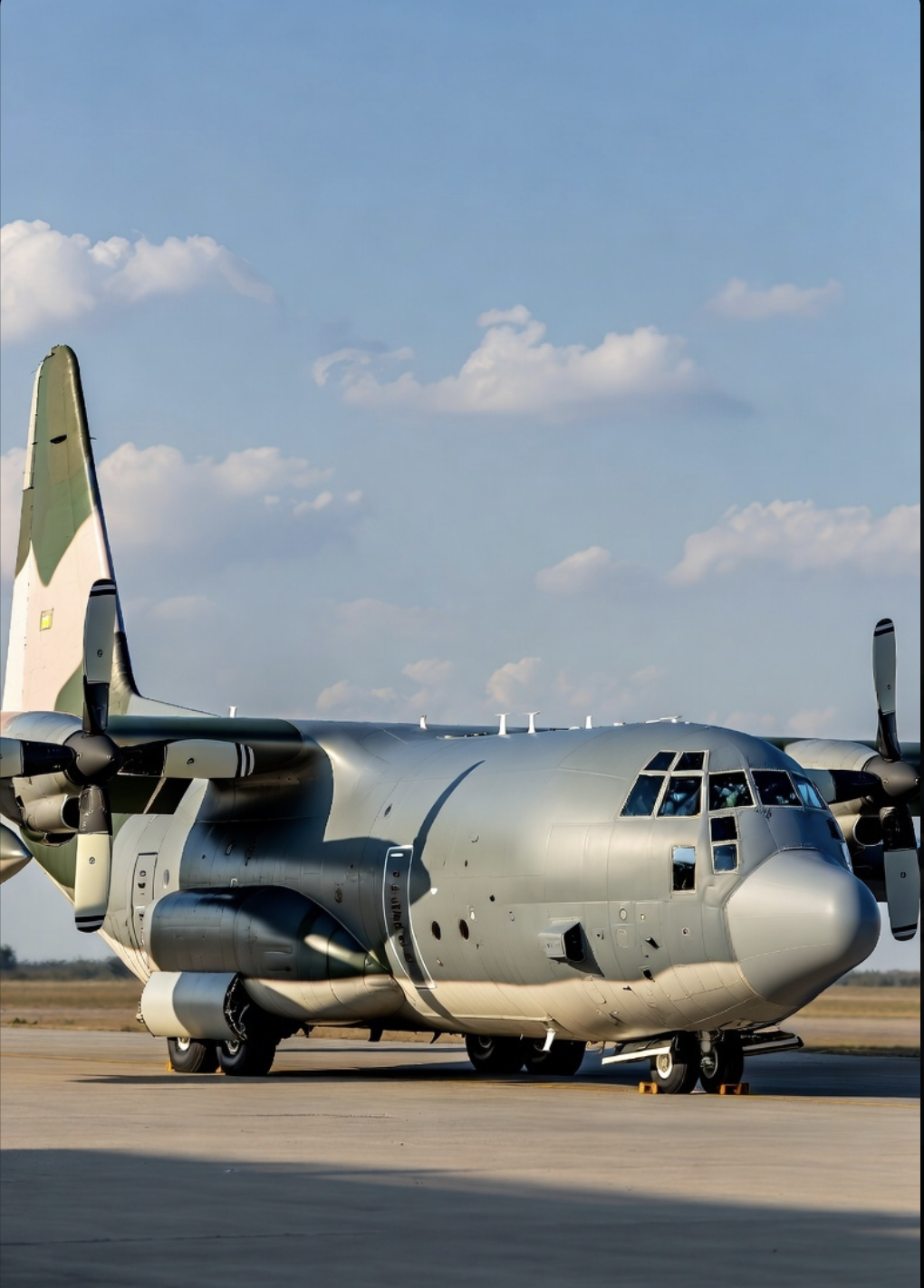
Picture this: a rugged beast of the skies, claws of metal slicing through Himalayan winds as it drops life-saving supplies to soldiers stationed on the world’s highest battlegrounds. The C-130J Super Hercules India legacy isn’t just about aviation—it’s about survival, resilience, and trust forged through thousands of missions.The C-130J Super Hercules India program continues to influence India’s tactical airlift planning and overall defence modernization strategy.
And now, as the Indian Air Force (IAF) stares down a rapidly aging Soviet fleet, the iconic Super Hercules isn’t merely returning to the spotlight—it’s storming the stage with the confidence of a veteran ready for one last heroic leap.
With India preparing for a massive Medium Transport Aircraft (MTA) procurement—worth a staggering $6–8 billion—the stage is set for the most competitive airlift showdown in decades. Let’s dive deep into why this aircraft may once again become India’s trusted workhorse.
Why the C-130J Super Hercules India Program Still Feels Like Home
As India evaluates new tactical airlift solutions and Indian Air Force transport aircraft modernization, this becomes even more important. There’s an old truth in aviation procurement: the best aircraft is the one you already know. And the IAF knows the Super Hercules intimately.
India inducted 12 C-130J aircraft in 2011, and these platforms have since logged more than 50,000 flight hours, performing everything from high-altitude Ladakh missions to humanitarian operations in flood-stricken Uttarakhand.
Proven in India’s Toughest Missions
When monsoon floods turned Uttarakhand roads into rivers in 2013, the C-130J fleet delivered critical relief, showcasing its unmatched Short Takeoff and Landing (STOL) capability. It could take off from Himalayan strips that barely qualify as airfields. This is one of the reasons analysts highlight the reliability of the C-130J Super Hercules India program in difficult terrains.
This is where the C-130J Super Hercules India experience becomes a strategic advantage—not just a historical footnote.
A Decade of Existing Infrastructure—An Unmatched Edge
Lockheed Martin is emphasizing something crucial: the IAF already has the ecosystem needed to operate the C-130J Super Hercules India fleet seamlessly.
Existing Pilots, Hangars & Maintenance Pipelines
- Pilots are trained
- Ground crews are experienced
- Spare parts and repair hubs are already running.
- This existing logistical ecosystem is a major advantage compared to competitors in the medium transport aircraft India category.
This cuts years off integration time—while rivals would need to build everything from scratch.
A Powerful Tata Partnership
Lockheed’s joint venture with Tata Advanced Systems Limited (TASL) manufactures empennage (tail assemblies) for every new C-130J globally.
This existing synergy allows Lockheed to offer:
- 30% local content immediately
- The ability to quickly scale to higher indigenization
- A future Bengaluru-based MRO hub for exports across Asia.
The Competition—A Three-Way Dogfight in the Skies
India’s MTA race has attracted three global heavyweights:
Embraer C-390 Millennium
Brazil’s Embraer has surged forward thanks to its blockbuster October 2025 partnership with Mahindra.
Key strengths:
- 26-ton payload (greater than C-130J)
- Advanced avionics
- Ambition for 70% local manufacturing
- Potential tanker variant for extended northern missions
Key weakness:
- Zero IAF operational experience
- No existing infrastructure
- Would require new training, new logistics, new maintenance
(External resource:
Embraer Official Site ← DoFollow)
Airbus A400M Atlas
A European giant in every sense.
Strengths:
- 37-ton payload (largest of all contenders)
- 3,300 km range with payload
- Existing Tata partnership via C-295 program
Weaknesses:
- Very high price: $150–180 million per unit
- Larger footprint challenges tactical operations
- Past India trials were limited
(External resource:
Airbus Defence ← DoFollow)
Comparing the Contenders (Mid-November 2025 Briefs)
| Feature | C-130J Super Hercules India | Embraer C-390 | Airbus A400M |
|---|---|---|---|
| Max Payload | ~20 tons | ~26 tons | ~37 tons |
| Range | ~2,400 km | ~2,800 km | ~3,300 km |
| IAF Experience | High | None | Low |
| Unit Cost | $80–90M | $85–95M | $150–180M |
| Local Partner | Tata | Mahindra | Tata |
| Strength | STOL capability | Payload | Heavy lift |
| Weakness | Lower payload | Untested in IAF | High cost |
In short:
- C-130J wins on familiarity, integration, and tactical ruggedness
- C-390 wins on payload-to-cost ratio
- A400M dominates strategic lift but loses on price
Echoes From Past Deals—Why History Matters
India’s major aviation purchases almost always follow one rule: proven partnerships win big.
Examples:
- The C-17 Globemaster deal (2015) transformed strategic lift capacity
- The C-295 contract (2021) birthed a Tata-Airbus production ecosystem
- The delayed An-32 replacement program taught India the cost of waiting too long
The C-130J Super Hercules India pitch mirrors these successful frameworks—emphasizing local production, MRO, and long-term industrial collaboration.
Past successes reinforce why many experts see the C-130J Super Hercules India bid as low-risk and high-value.
What’s New as of November 17, 2025?
H3: Acceptance of Necessity by December
Russia’s VPK reported that the Ministry of Defence aims to grant AoN approval by year-end—pushing tenders into Q1 2026.
Lockheed’s Updated Offer
Lockheed is now pitching the C-130J-30 stretched variant, capable of 18–30 tons depending on configuration.
Embraer’s Aggressive India Push
Mahindra’s chairman has publicly described the partnership as a “massive leap for India’s aerospace workforce.”
Airbus Remains Quiet
But its C-295 Tata production line keeps it relevant.
Why Winning This Deal Matters for India
The stakes are enormous—not just for the IAF but for Indian industry.
Expected national benefits:
- 50–60% technology transfer in later phases
- Multi-city MRO hubs
- 8,000–12,000 new aviation jobs
- Stronger logistics against China on northern borders
- Diversification of defence imports
This is why the C-130J Super Hercules India program isn’t just about replacing aircraft—it’s about shaping India’s aerospace future.
Final Approach—Is the C-130J Still India’s Best Bet?
The answer depends on what India values most:
If India wants:
- A proven fleet
- Seamless integration
- Existing infrastructure
- High reliability
➡️ C-130J Super Hercules India is the safest, lowest-risk choice.
If India prioritizes:
- Higher payload
- Ambitious local manufacturing goals
➡️ C-390 becomes extremely attractive.
If India wants:
- Strategic heavy lifting
➡️ A400M is unmatched but expensive.
The next few weeks—especially the Defence Acquisition Council’s upcoming meeting—could decide which way India’s airlift future will fly.
Supporters argue that choosing the C-130J Super Hercules India platform offers the lowest operational risk and the fastest deployment timeline.
Ultimately, the C-130J Super Hercules India bid combines proven mission success, reliable industrial partnerships, and strong tactical capability, making it a frontrunner as India enters a new era of air mobility modernization.