
Table of Contents
1. Future Battlefield India Challenges for the Indian Armed Forces
2. Operation Sindoor: India’s First Glimpse of the Future
3. Way 1 — The Soldier Must Become a Technology-Enabled Warrior
4. Way 2 — Mastering Counter-Drone Awareness and Modern Fieldcraft
5. Way 3 — Electronic Warfare Discipline From General to Sepoy
6. Way 4 — Information Warfare, OPSEC and the Social Media Battlefield
7. Way 5 — Decentralised Warfare and the Rise of the Junior Leader
8. Way 6 — Self-Sufficient Logistics and Drone-Based Resupply
9. Way 7 — Atmanirbharta: Building India’s Indigenous Defence Ecosystem
10. Training Must Replicate the Chaos of the Modern Battlefield
11. Civil-Military Integration and Infrastructure Protection
12. Frequently Asked Questions (FAQ)
13. Internal Link Suggestions
14. External Authority Links
India’s Armed Forces at a Crossroads
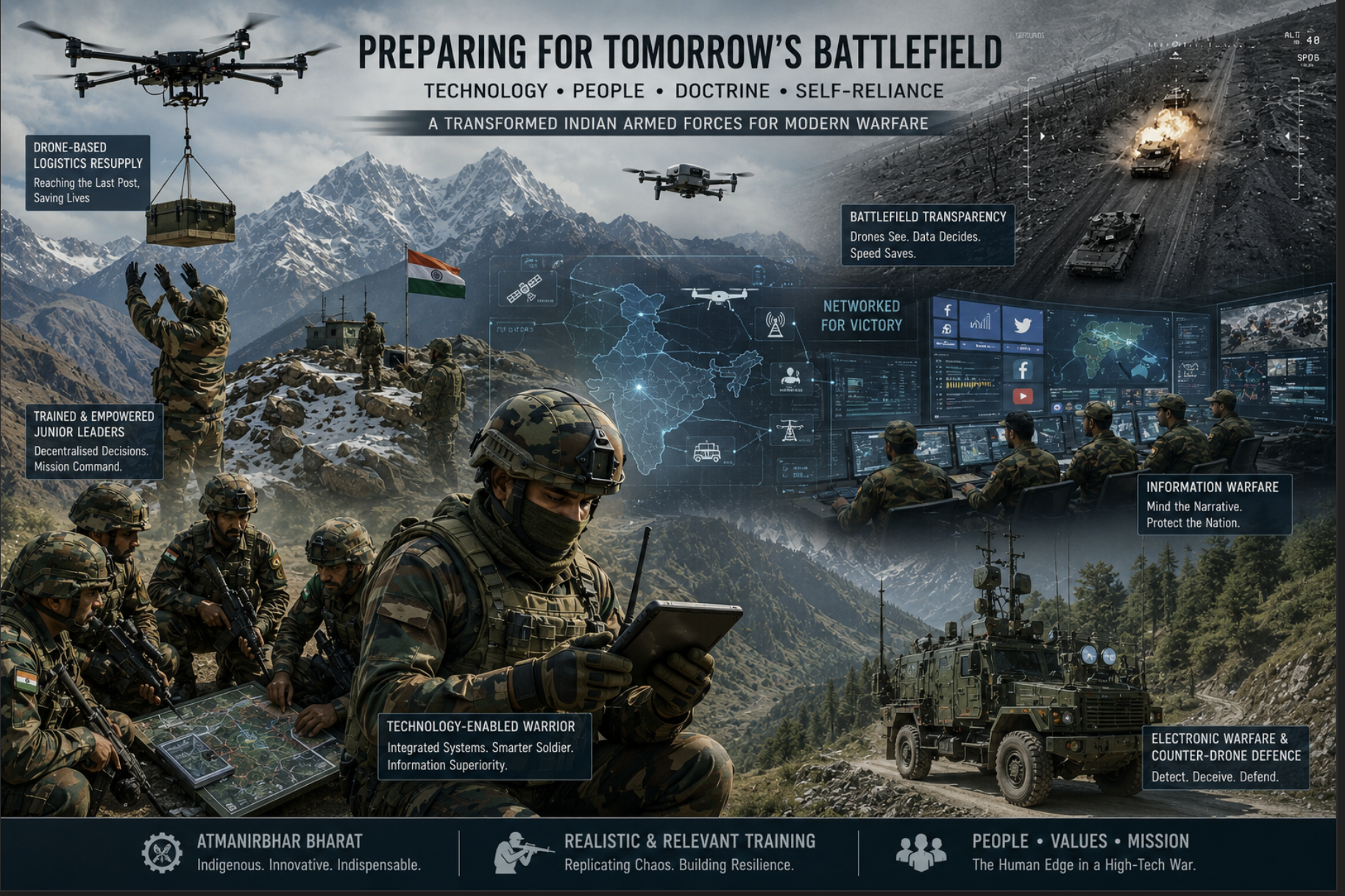
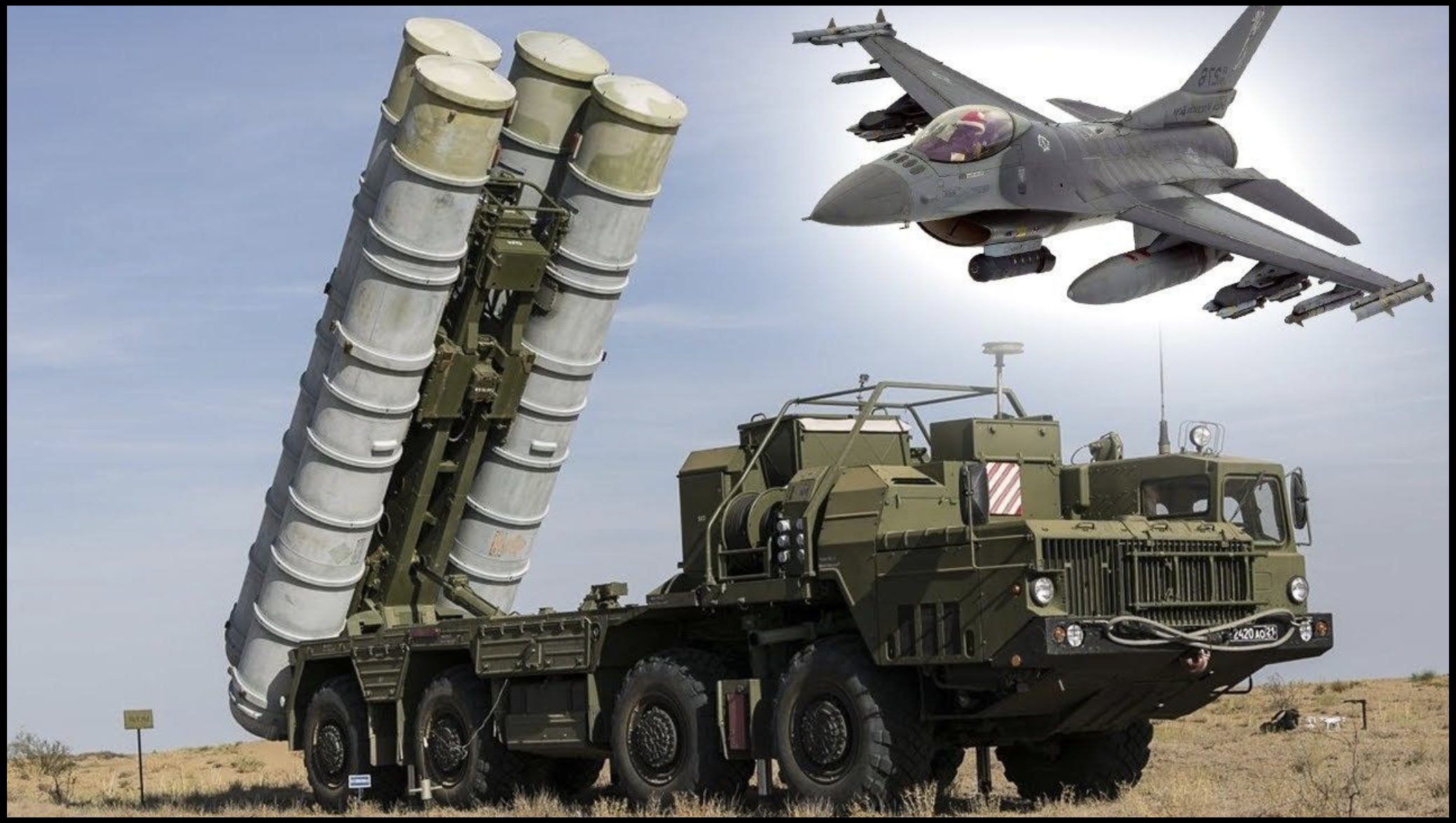
Future battlefield India scenarios are evolving rapidly as drones, AI, electronic warfare, and precision strike systems reshape modern military doctrine. When Indian artillery and missile systems opened fire on Pakistani military positions during Operation Sindoor in May 2025, it wasn’t simply another cross-border escalation. BrahMos missiles tore through Pakistani air defence infrastructure, launched from well within Indian territory. India’s S-400 system reportedly downed a Pakistani AEW&C aircraft at approximately 314 kilometres, a kill that, if confirmed, stands among the most consequential air defence engagements in regional history. Not a single Indian aircraft crossed the Line of Control. The battle was fought at distance, with precision, using technology that most analysts had been debating in seminars for years.
The message from Sindoor was unmistakable. The battlefield has fundamentally changed. What unfolded over those critical hours bears far closer resemblance to the Azerbaijan-Armenia conflict of 2020 and the grinding drone war in Ukraine than to the dogfights and armoured thrusts that shaped Indian military doctrine for decades. And yet, doctrine — and the soldiers expected to execute it, cannot afford to lag behind the weapons they are handed.
India sits at a difficult strategic junction. It faces territorial disputes with two nuclear-armed neighbours. It has demonstrated, convincingly, that it can strike hard without putting aircraft in harm’s way. But the same technology India used in Sindoor is technology that Pakistan, China, and others are developing, acquiring, and refining to use against India. The question is not whether future wars will be different. They already are. The real question is whether India’s armed forces — its generals, its junior officers, its JCOs, its Naib Subedars, its riflemen on the ground, are being genuinely transformed to fight them.
1. Future Battlefield India Challenges for the Indian Armed Forces
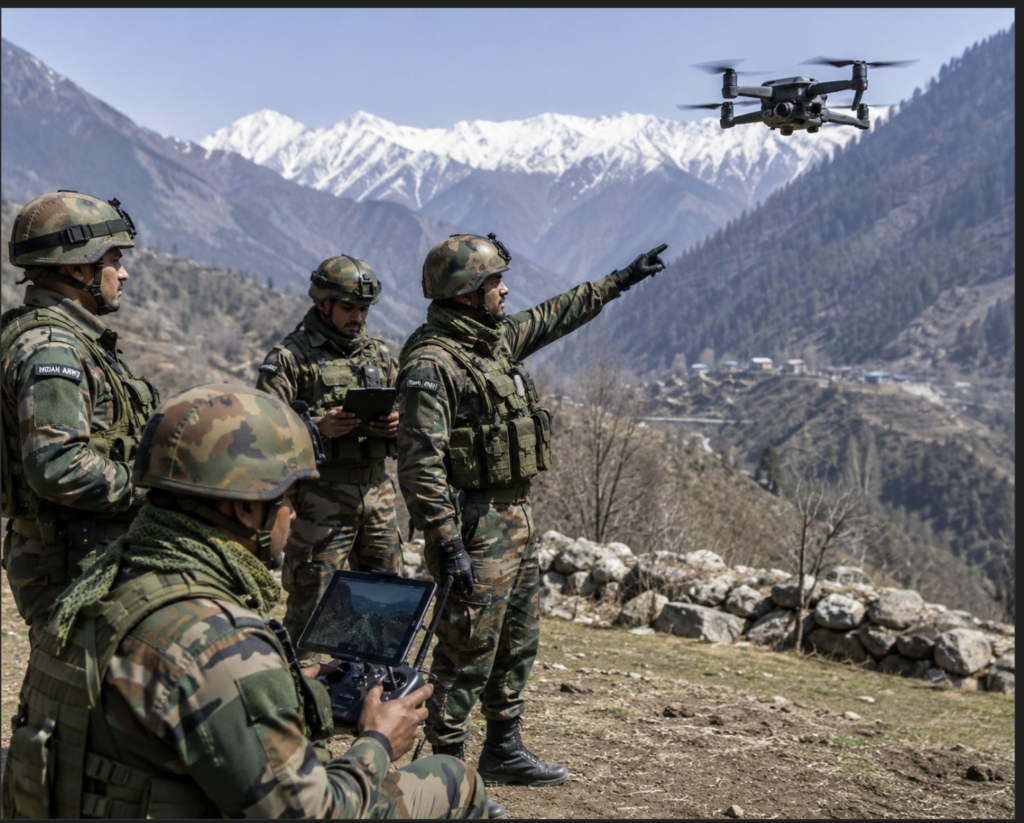
Before any prescription, it helps to understand the diagnosis. The last five years have handed military analysts more data on high-intensity modern warfare than the previous three decades combined. Three conflicts, in particular, have rewritten core assumptions.
Azerbaijan-Armenia 2020 and 2023: The Drone Watershed
In September 2020, Armenian armoured formations were not destroyed in close combat. They were hunted from the air — by Turkish Bayraktar TB2 drones and Israeli-designed loitering munitions that located, tracked and struck them before any conventional engagement occurred. Armenia’s Soviet-era air defence systems were effectively blind to low-observable UAVs operating at medium altitude. The armoured columns, designed for a different era of warfare entirely, became target practice. A ceasefire came after Armenian losses had reached catastrophic proportions. The 2023 operation that ended Nagorno-Karabakh took less than 24 hours.
The lesson was unambiguous: if you cannot see the sky, and your adversary can, the battle is already decided before the first exchange of fire.
The Russo-Ukraine War: The Transparent Battlefield Becomes Real
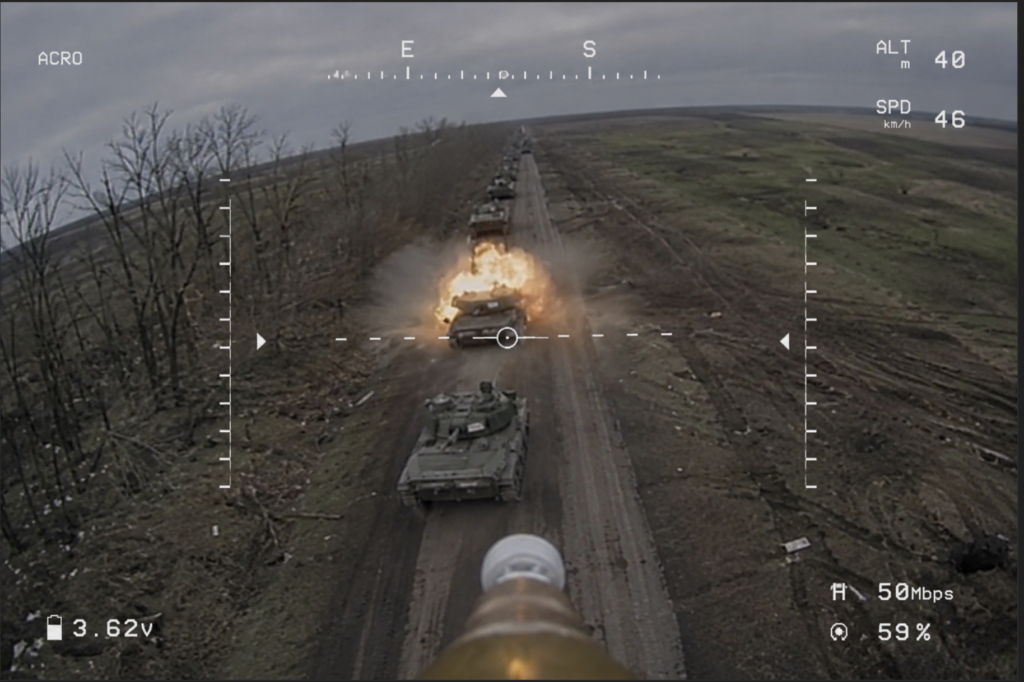
Ukraine changed almost everything analysts believed they understood about conventional peer-on-peer warfare. Russia’s air force — numerically and qualitatively superior to Ukraine’s — suffered devastating losses against layered air defences, forcing Moscow’s pilots to stay inside their own airspace and rely on glide bombs and cruise missiles for most strike missions. Large mechanised formations were methodically shredded by drone-spotted artillery. Tactical surprise became structurally impossible. Every parked vehicle, every gathered formation, every supply convoy was visible within minutes.
As the conflict progressed, Ukraine compensated for its manpower disadvantage with a remarkable proliferation of commercial and military drones. Reconnaissance feeds reached artillery crews within minutes of a target being spotted. FPV drones became the cheapest and most versatile weapon at the tactical level. Russian forces adapted — incorporating drone units, counter-drone systems, loitering munitions and electronic warfare into every formation. Ukrainian forces, for all their ingenuity, still found that holding territory required soldiers on the ground.
The battlefield was permanently transparent, continuously observed, and lethal at every level of the force structure simultaneously.
2. Operation Sindoor: India’s First Glimpse of the Future
India’s Operation Sindoor in May 2025 reflected many of the patterns observed in Ukraine, but with its own characteristics shaped by the specific capabilities of both sides. With Pakistan fielding Chinese air defence systems — including variants of the HQ-9 and LY-80 — India kept its aircraft well within national airspace and relied on BrahMos cruise missiles, loitering munitions and precision-guided artillery munitions to degrade Pakistani air defences and strike terrorist infrastructure.
Pakistan’s Turkish-supplied Akinci drones were deployed. India’s counter-drone and electronic warfare systems engaged them. The S-400’s reported long-range kill demonstrated that air battles are increasingly being decided at ranges that make traditional within-visual-range fighter engagements operationally secondary. Both sides kept their crewed aircraft away from contested airspace — a pattern strikingly similar to how Russia and Ukraine have managed their air campaigns.
Sindoor also differed sharply from Operation Bandar in 2019, where Indian and Pakistani aircraft engaged in dogfights over Balakot with losses on both sides. The doctrinal shift between 2019 and 2025 reflects how rapidly the threat environment changed — and how India adapted its operational approach accordingly.
Artillery during Sindoor used precision-guided munitions to strike terrorist camps and military positions. The Indian Army has since inducted UAVs and loitering munitions down to battalion level. Rudra brigades and Integrated Battle Groups are replacing large mechanised formations. A rocket and missile force for deep strikes is reportedly being raised. Fire-and-scoot tactics have been adopted by artillery to evade adversary counter-battery radar and loitering munitions.
Key Operational Finding
In all three recent conflicts, large formations without organic drone capability and electronic warfare awareness were disproportionately vulnerable. The section, the platoon, the battery — the smallest tactical unit — became the decisive level of war.
Way 1 — The Soldier Must Become a Technology-Enabled Warrior
The most important transformation in modern warfare is not the drone or the missile. It is the human expected to operate in the same environment as the drone and the missile — who may be its target as much as its operator.
For most of the 20th century, a soldier’s identity was inseparable from his primary weapon. The infantryman closed with the enemy and killed him. The tanker exploited the breakthrough. Each role was defined, practiced, and relatively stable. That clarity has been replaced by a more demanding, more ambiguous reality.
In Ukraine, a soldier who cannot identify the acoustic signature of an FPV drone approaching at low altitude risks being killed before he fully processes the threat. In the Nagorno-Karabakh campaign, Armenian soldiers died from loitering munitions they never saw, guided by operators watching feeds from altitude. The battlefield is now monitored from above, continuously, at minimal cost. Concealment has to defeat sensors, not just eyes.
Doctrinal Imperative
The future Indian soldier must evolve from a platform-centric fighter into a technology-enabled battlefield node — capable of sensing, communicating, surviving and striking in a transparent and electronically contested battlespace.
This transformation demands a set of competencies that most current training syllabi do not yet formally address at individual soldier level:
- Drone identification: recognising UAV signatures by acoustic pattern, silhouette, approach behaviour and altitude
- Sensor awareness: understanding what reveals a position — heat signature, radio emissions, movement pattern, disturbed terrain
- Digital communication hygiene: operating securely in an environment where transmissions can be intercepted and geolocated
- Basic AI literacy: understanding how AI-assisted targeting and surveillance systems classify and prioritise targets — and how to deny them those signatures
- GPS-denied operations: maintaining tactical navigation and unit coordination when satellite navigation is jammed or spoofed
Psychological Resilience: The War No One Talks About
Modern warfare creates a specific and largely unprecedented form of mental attrition. Constant overhead surveillance means a soldier cannot truly stand down — even in a designated rest area, a drone may be monitoring. FPV attacks arrive with seconds of warning, if any. Sleep is fragmented by persistent threat. Radio chatter, drone feeds and fragmentary intelligence create information overload that degrades decision quality over time.
In Ukraine, psychological exhaustion has emerged as one of the most operationally significant factors affecting combat effectiveness — not only at the front but across logistics nodes, command posts and reserve positions that are never genuinely safe from deep-strike drones. Units that received psychological conditioning as part of training showed measurably better performance under sustained operational pressure.
Indian military training needs to incorporate structured stress-inoculation that replicates persistent surveillance environments, simulates drone attacks during rest and administrative movement, and deliberately creates information overload in command exercises. Mental conditioning cannot remain a welfare afterthought.
- Stress inoculation under simulated persistent surveillance — including drone intrusions during rest rotations
- Decision-making exercises under conditions of genuine cognitive overload and communications degradation
- Combat stress resilience modules embedded within JCO and NCO advancement training
- Peer support and psychological first aid capability at company and platoon level
Way 2 — Mastering Counter-Drone Awareness and Modern Fieldcraft
Experienced soldiers from the Ukraine conflict describe a specific psychological adjustment that took time: learning to look up before looking forward. The threat plane expanded vertically. Fields of fire now include the airspace above a position — not just the ground in front of it. Any soldier who has not internalised this instinct is operationally unready.
Counter-drone awareness needs to become baseline knowledge, embedded in the same mandatory training cycle as weapon handling and first field dressing. The consequences of ignorance are not a failed exercise assessment — they are casualties.
What Every Soldier Must Know
- Identifying FPV drone signatures: audio frequency at different distances, typical approach patterns, silhouette recognition at low altitude
- Immediate action drills on drone sighting: position change, dispersal, cover, fire control orders and reporting procedure
- Camouflage against thermal and multispectral sensors: thermal blankets, terrain masking, heat signature discipline under overhead observation
- Movement discipline under drone observation: spacing, use of shadows and dead ground, timing and avoiding predictable routes
- Basic knowledge of portable counter-drone systems and anti-drone nets at section level
The New Fieldcraft: Hiding in a Battlefield That Can See Everything
Traditional camouflage was designed to defeat human observation and photographic reconnaissance from specific angles. Today’s surveillance platforms carry thermal imagers, synthetic aperture radar and multispectral sensors capable of detecting body heat through thin overhead cover, identifying vehicle tracks hours after a convoy has passed, and recognising disturbed earth from altitude.
Fieldcraft must be comprehensively updated to address this. Heat signature reduction requires thermal capes and camouflage nets with thermal masking properties, and positions must use terrain to break line of sight to airborne sensors. Electromagnetic discipline is the new equivalent of light discipline — leaving a phone powered on, running a GPS application or transmitting on an unsecured channel in a forward position is operationally equivalent to lighting a flare in your foxhole.
- Heat signature reduction: thermal capes, terrain defilade, robust overhead cover with insulating properties
- Strict light and electromagnetic discipline at tactical halts and in all forward positions
- Dispersion to prevent multiple casualties from a single drone or munitions strike
- Camouflage nets meeting modern thermal and radar cross-section requirements — legacy nets are insufficient
- Avoiding predictable patterns: departure times, routes used, rest positions, meal preparation schedules
Way 3 — Electronic Warfare Discipline From General to Sepoy
A single switched-on personal mobile phone can expose an entire company position. That is not a theoretical concern. In Ukraine, Russian units were geolocated through commercial SIM card signals and struck with artillery within minutes. Ukrainian forces experienced the same vulnerability. The smartphone, the tablet, the personal GPS tracker — all have become operational security liabilities sitting in every soldier’s pocket, often with the knowledge and permission of his chain of command.
Electronic warfare discipline cannot be confined to the EW regiment or the signals officer. It has to extend from corps headquarters to the section in contact. The soldier needs to understand why emission control matters, not simply that it appears as a standing order on a duty board.
What Electronic Warfare Awareness Means at Unit Level
- No personal mobile devices in forward positions — enforced as an operational standard, not recommended as a preference
- Understanding GPS jamming and spoofing: what it looks like in practice, and how to maintain orientation without satellite navigation
- Radio silence procedures: knowing when to transmit, when to observe silence, and how quickly a transmission can be triangulated
- Emission control awareness: every powered device broadcasts — batteries, navigation apps, fitness trackers and Bluetooth headsets all create detectable signals
- Cyber hygiene on personal devices before any operational deployment: disabling automatic location services, cloud syncing and application permissions that could leak position data
- Recognising potential signals intelligence threats — understanding that the adversary’s collection architecture may be monitoring tactical frequencies continuously
This concern is specifically acute on India’s frontiers. The India-Pakistan border environment involves sophisticated electronic intelligence collection. Chinese EW systems — which Pakistan operates — are designed to detect, classify and exploit radio frequency emissions across a broad spectrum. Assuming tactical communications are secure without disciplined emission management is a gamble that the lessons of recent conflict simply do not support.
Critical Survival Fact
A single unsecured mobile phone transmission can geolocate a platoon position within seconds using modern SIGINT systems. Electronic discipline is not a procedural nicety — it is a direct determinant of whether soldiers come home.
Way 4 — Information Warfare, OPSEC and the Social Media Battlefield
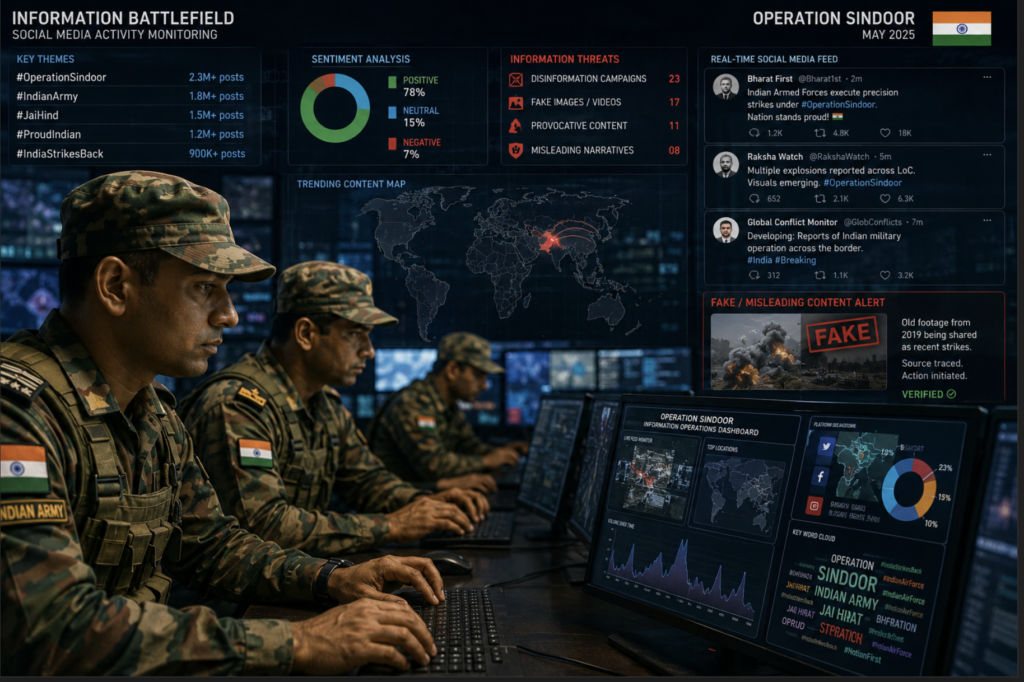
Wars are no longer fought only in the physical domain. The conflict accompanying Operation Sindoor was joined, almost simultaneously, by an intense information campaign across every major social media platform. Pakistani military accounts circulated claims about Indian aircraft losses. Indian channels showed BrahMos strike footage. Deepfaked video circulated within hours of the operation beginning. Neither side could be taken as a reliable source, and ordinary soldiers became unwilling participants in the narrative battle simply by having phones.
Every soldier today operates not only in the physical battlespace but also in the cognitive and information domain — whether he intends to or not. This is not metaphor. It has direct operational consequences.
The Specific Risks
- Location sharing: a geotagged photograph posted from a forward area reveals position, unit composition and equipment — and it persists online indefinitely
- Deepfakes and misinformation: soldiers may receive or unknowingly propagate false information about the operational situation, degrading morale and distorting tactical picture
- Narrative exploitation: adversary information operations actively seek to use publicly available soldier posts to construct and disseminate propaganda directed at Indian civilian audiences
- OPSEC breaches via family communication: well-intentioned messages home about movements, locations or unit activities have historically resulted in genuine operational security failures
- Psychological operations targeting junior ranks: enemy IO targeting individual soldiers through social platforms to create doubt, fear or disobedience
What Must Change
The Indian Army’s operational security framework needs to evolve beyond periodic briefings and generic instruction. Unit-level information warfare training should be a standing curriculum item — with the same mandatory status as weapon classification:
- Strict social media blackout protocols during operational periods, enforced through unit-level device management not just policy
- Recognising and refusing to share unverified information, including compelling video — even if it appears to confirm desired narratives
- Family security briefings: systematically warning family members not to discuss or post information about unit location, equipment or movements
- Understanding narrative warfare: how adversary psychological operations are constructed, how to identify them and how to report suspected IO activity
- Digital hygiene pre-deployment: turning off location services, reviewing all app permissions, and using only authorised encrypted communication channels during operations.
Way 5 — Decentralised Warfare and the Rise of the Junior Leader
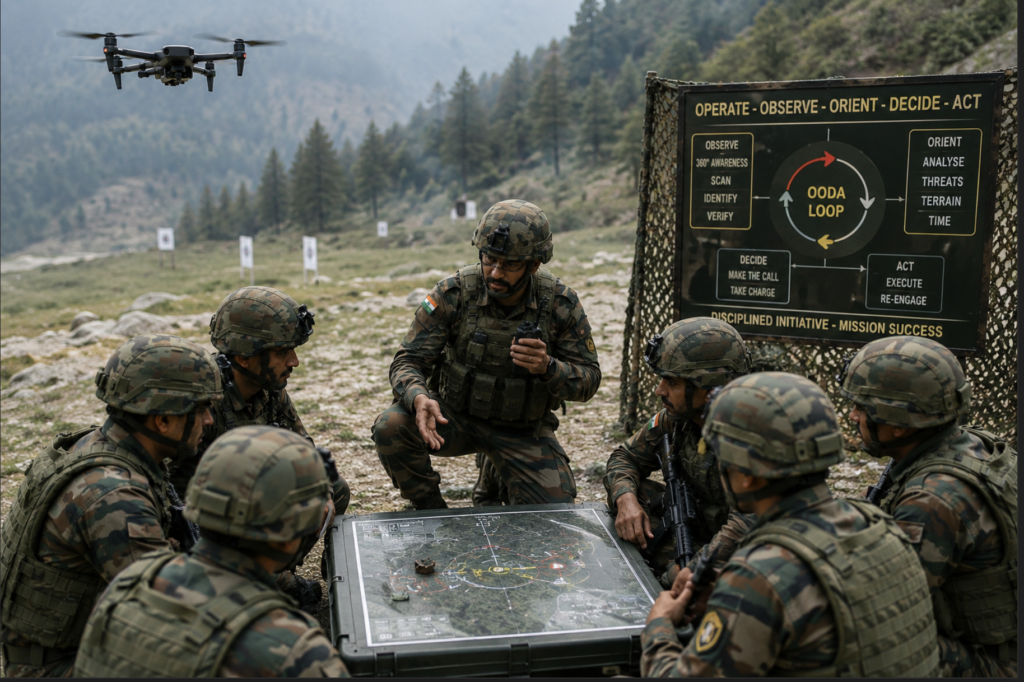
In a contested electronic environment where communications can be jammed, intercepted or deliberately disrupted, the soldier who waits for orders from his commanding officer may simply wait too long. The Ukraine conflict has been a sustained demonstration of what happens when command structures are degraded — and of how consistently units trained for decentralised, mission-command-style operations outperformed those that had not.
Large troop concentrations are targets. Any detectable formation of more than a handful of soldiers, vehicles or equipment presents an opportunity for drone-spotted artillery, loitering munitions or precision guided rockets. Dispersed, smaller teams — each capable of independent action and authorised to make tactical decisions without constant upward reference — survive better and fight more effectively. This demands a genuine cultural shift from aspects of the centralised command tradition that still characterises significant portions of Indian Army tactical practice.
What Decentralisation Actually Requires
- Section commanders trained, empowered and psychologically prepared to execute mission-type orders without step-by-step guidance from above
- JCOs capable of independent tactical decision-making — including initiating calls for fire, coordinating with adjacent units and reorganising after casualties without waiting for officer direction
- Young officers who understand their commanding officer’s intent sufficiently well to act decisively during a communications blackout
- Training scenarios that deliberately simulate communications failure, forcing junior leaders to improvise and complete assigned missions with available means
- A command culture that rewards initiative in training — rather than penalising deviation from the detailed plan — so that the instinct for independent action carries over to operations
This is not about dismantling discipline or abandoning the chain of command. It is about ensuring that when communications go down and the drone above makes any gathered formation a target, the corporal and the Naib Subedar know exactly what to do — and are confident enough to do it.
The Ukraine Lesson
In Ukraine, the sections and platoons that survived longest were those whose soldiers had internalised the mission objective well enough to continue without orders. Junior leadership became the decisive military advantage at the tactical level.
Way 6 — Self-Sufficient Logistics and Drone-Based Resupply
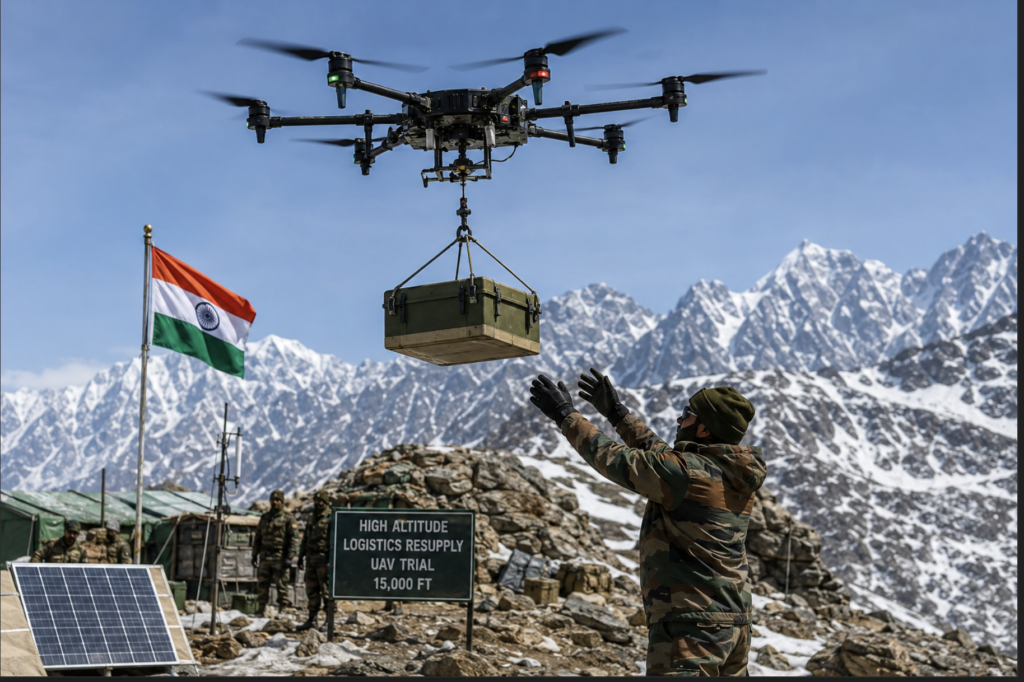
The vulnerability of logistics lines has been among the defining operational features of the Ukraine conflict. Russian supply convoys were tracked, targeted and destroyed from the air with regularity. Ukrainian resupply operations adapted — using smaller, faster vehicles moving at night with drone-based delivery supplementing conventional logistics for front-line positions. Traditional large, centralised resupply operations became reliable targets.
For India, this lesson has immediate relevance along both the northern and western frontiers. High-altitude mountain logistics have always been operationally demanding. Future conflicts add the dimensions of persistent drone surveillance and near-continuous threat of precision strikes on logistics nodes, fuel dumps, ammunition depots and vehicle parks. The era of predictable, large logistics convoys operating openly in daylight is giving way to dispersed, mobile, drone-supplemented resupply that accepts disruption as a planning baseline.
What Needs to Change at Unit Level
- Distributed ammunition storage: pre-positioned dispersed caches rather than centralised dumps that present single high-value targets to adversary drone and missile systems
- Organic drone-based resupply capability at battalion level: lightweight platforms capable of delivering medical supplies, ammunition, batteries and rations to positions that conventional vehicles cannot safely reach
- Rapid relocation drills: the ability to break down a position and relocate before pattern analysis by adversary ISR platforms enables targeting
- Lightweight and modular combat loads: reducing dependence on resupply cycles for standard combat operations — soldiers who carry more capability in less weight need fewer resupply runs
- Drone-based casualty evacuation as a primary option where the threat environment makes helicopter or vehicle evacuation operationally unacceptable
India’s strategic posture along the LAC makes drone-based logistics particularly valuable. Positions at extreme altitude, where conventional rotary-wing aviation is constrained by density altitude and weather, could be resupplied more reliably and at lower risk using purpose-designed high-altitude logistics UAVs. Multiple DRDO and private sector programmes are pursuing exactly this capability.
Strategic Logic
When close air support and conventional logistics cannot be guaranteed in a contested airspace environment, troops must be prepared to fight in a self-sustaining mode for extended periods. Logistics planning must start from the assumption of disruption, not continuity.
Way 7 — Atmanirbharta: Building India’s Indigenous Defence Ecosystem
Ukraine’s drone programme flourished partly because Ukrainian industry could iterate rapidly on indigenous designs without waiting for foreign approval, export licensing or technology transfer agreements. Azerbaijan’s decisive military advantage in 2020 rested on Turkish and Israeli-supplied systems — highly effective, but not something Baku could have scaled or modified without continued foreign support. Iran discovered the hard way that imported weapons can be degraded when adversaries possess the electronic countermeasures designed specifically for those systems by the same Western engineers who sold them originally.
India’s Atmanirbhar Bharat defence initiative is not merely an economic or industrial policy. In the context of sustained high-intensity warfare, indigenous capability is a direct strategic requirement. A long war cannot be fought on imported munitions whose supply chains are subject to foreign political decisions. An adversary that understands the architecture of your weapons systems — because they helped design them for someone else — holds an advantage that no amount of tactical skill fully compensates for.
Where India Must Move Faster
- Indigenous drone production at scale: light ISR drones, FPV strike UAVs, loitering munitions and logistics platforms capable of high-volume domestic manufacture — not just development and prototype demonstration
- Secure communication systems: encrypted tactical radios and battlefield data links developed and produced in India, reducing reliance on imported hardware with opaque supply chains
- AI-enabled targeting and battle management: domestic development of AI-assisted target recognition software that does not depend on foreign data pipelines, cloud infrastructure or technology agreements that could be revoked
- Indigenous electronic warfare systems: broadband jamming, signal collection and direction-finding systems manufactured within India and updated on domestic timelines
- Domestic precision munitions ecosystem: the BrahMos, Pralay and emerging hypersonic programmes represent significant achievements; the production volumes and munitions stockpile depth for a sustained conflict require honest assessment and urgent investment
- Private sector integration as a strategic imperative: DRDO alone cannot deliver the volume, variety and iteration speed that modern warfare demands — India’s private defence industry must be fast-tracked, funded and empowered with genuine technology access, not just subcontracting roles
The Indian Army’s recent inductions — Switch UAVs, SkyStriker loitering munitions, the emerging Nagastra series and high-altitude ISR platforms — signal that procurement is beginning to reflect operational urgency. The pace must accelerate significantly. In a peer conflict, the side that exhausts its precision munitions stockpile first does not necessarily lose immediately, but it loses its operational coherence. India’s production depth relative to projected consumption in sustained high-intensity operations requires a level of public and policy scrutiny it has not yet received.
Training Must Replicate the Chaos of the Modern Battlefield
Equipment transformation without training transformation is procurement without operational return. The Russo-Ukraine conflict has demonstrated repeatedly that units equipped with advanced weapons but trained on older conceptual frameworks perform consistently below their theoretical capability. Ukraine’s most effective drone units were not those with the most advanced hardware — they were those who had trained longest under realistic conditions that approximated what they would actually encounter.
India’s training establishments — ARTRAC, Infantry School Mhow, the Armoured Corps Centre, the War Colleges — must comprehensively update curricula and exercise scenarios. The gap between what is being purchased and what is being trained against is itself a strategic vulnerability.
What Modern Military Training Must Now Include
- Drone warfare simulation: synthetic training environments featuring persistent UAV threat, drone-spotted artillery, FPV attack drills and counter-drone immediate action — at every level from section to corps
- EW-denied exercises: field training conducted under active jamming where communications are degraded and GPS is unavailable — not as an occasional special scenario but as a regular training condition
- AI-assisted targeting familiarisation: training both in the use of AI tools for target identification and battle tracking, and in understanding their limitations and vulnerabilities to countermeasures
- Integrated tri-service exercises: joint operations between the Army, Air Force and Navy under contested airspace conditions — not compartmentalised service training with token liaison elements
- Real-time battlefield transparency exercises: operations conducted under the explicit assumption that adversary ISR has full visibility of all movements and positions
- Counter-UAS live training: not classroom instruction on drone typology but actual engagement training against representative systems — including recognition, reporting, evasion and defeat
The governing principle for training reform is straightforward: peacetime training must replicate wartime technological saturation. If soldiers have never navigated in a GPS-denied environment during an exercise, they will fumble through it the first time it occurs in a real operation — and the first time may be the decisive moment.
This extends to the institutional and conceptual level. If headquarters staffs have never conducted an operations cycle while assuming their communications were being monitored and that the enemy could observe their forward positions in near-real time, they will not be mentally prepared for the environment that Operation Sindoor — and every realistic assessment of a future peer conflict — suggests is coming.
Civil-Military Integration and Infrastructure Protection
Modern wars do not stop at military targets. Russia’s sustained campaign against Ukraine’s energy infrastructure — power stations, transformer substations, fuel storage, water treatment — was designed to degrade the civilian economy that underpins the military effort. The logic is not new. What is new is the precision and reach with which it can be executed.
India’s critical infrastructure — railway junctions, power grid nodes, fuel terminals, internet exchange points, communications relay stations — is broadly civilian in ownership and management, but military in wartime significance. The gap between civil administration and military planning for the active protection of that infrastructure is a known and documented vulnerability.
- Systematic identification and hardening of critical infrastructure nodes that would be priority targets in a regional conflict
- Civil defence planning that is actually rehearsed and updated regularly — not just filed as a contingency document in peacetime
- Integrated military-civil coordination mechanisms for rapid transition from peacetime to conflict management
- Air defence planning that explicitly covers civilian infrastructure as well as military installations
- Designated military liaison officers for critical infrastructure operators — power, communications, fuel, transport — to enable rapid and secure communication during a crisis
India’s National Disaster Management Authority and state civil defence structures exist and have genuine capability for natural disasters. Their integration with military contingency planning for armed conflict — the specific threat profile of precision missile and drone attack on industrial and energy infrastructure — remains at an early and inadequately tested stage. Future conflicts, based on every recent precedent, may not provide a slow and predictable escalation ladder.
Frequently Asked Questions (FAQ)
Q1. What was Operation Sindoor and why does it matter for India’s military transformation?
Operation Sindoor, conducted in May 2025, was India’s military response to cross-border terrorist attacks. It demonstrated India’s ability to conduct precise, long-range strikes using BrahMos missiles and loitering munitions launched from within Indian territory, without requiring aircraft to penetrate contested Pakistani airspace. The operation provided India’s first live operational validation of its standoff precision strike capability, and the lessons it generated — about contested airspace management, long-range precision fires, and drone-enabled targeting — are now directly shaping Army and Air Force transformation priorities.
Q2. How are drones changing the reality for ground soldiers?
Drones have made the battlefield permanently transparent. Reconnaissance UAVs provide near-real-time intelligence on troop positions at extremely low cost, eliminating tactical surprise in most conditions. FPV strike drones can attack individual soldiers and vehicles with precision. Loitering munitions can hold a patrol area autonomously and engage when a valid target appears. For foot soldiers, this means no position is genuinely safe, camouflage must now defeat thermal and multispectral sensors rather than just visual observation, and every movement must assume it is being observed and potentially targeted from altitude.
Q3. What specifically does electronic warfare discipline mean for a soldier in a forward position?
At the individual level, electronic warfare discipline means treating every powered electronic device as a potential broadcast antenna that an adversary’s signals intelligence system can detect, locate and exploit. In practice it means following strict protocols on when and how to use any communication equipment, keeping personal mobile devices powered off and stored in forward positions, and understanding that a single unsecured transmission can reveal a unit’s location to enemy SIGINT within seconds. It is not a technical constraint for signals specialists — it is a basic survival habit for every soldier in a threat environment.
Q4. Why is junior leadership becoming more critical than in previous decades?
Modern contested environments — combining electronic jamming, persistent drone surveillance and the lethal vulnerability of any gathered formation — systematically degrade centralised command. Communications are disrupted. Higher commanders cannot always be reached in time. Units must continue operations based on their internalised understanding of the mission objective, not on received orders. This places decisive tactical responsibility on section commanders, JCOs and young officers who must exercise initiative and judgement independently — something that requires explicit training, cultural permission and confidence that the current system does not consistently provide.
Q5. What is Atmanirbharta in defence and why is it a strategic, not just industrial, necessity?
Atmanirbharta — self-reliance — in defence is the policy of developing and manufacturing military capability domestically rather than depending primarily on foreign procurement. In a military context, it is strategic rather than merely industrial because imported weapons systems are subject to supply chain disruption in wartime, may incorporate foreign-controlled software or components that could be remotely disabled or exploited, and cannot be rapidly scaled or modified without the original supplier’s cooperation and willingness. Indigenous production allows India to sustain high-intensity operations indefinitely, iterate rapidly on design based on operational feedback, and avoid the specific vulnerability of depending on foreign goodwill for the delivery of critical munitions during an active conflict.
Q6. How should the training system change to address modern battlefield conditions?
The fundamental shift required is from training that rehearses known procedures under controlled conditions to training that replicates the unpredictable, sensor-saturated, communications-degraded environment of actual modern warfare. This means regular exercises in GPS-denied and EW-jammed conditions, training with drone threats as a baseline rather than a special scenario, and exercises conducted under the explicit assumption that adversary ISR can observe all movements. The institutional standard must change: training success should not be measured by smooth execution of a scripted sequence — it should be measured by the ability to adapt effectively when the script is torn up.
Q7. What role does social media discipline play in military operational security today?
Social media has become an active and consequential theatre of military information operations. Geotagged photographs, unit identification in posts, discussions about movements and locations — all of these create exploitable intelligence that adversary collection systems actively mine from publicly accessible platforms. Deepfake and misinformation operations during conflicts now specifically target serving soldiers and their families to generate confusion, damage morale and create false intelligence pictures. Social media discipline is not a generic conduct policy — it is a specific operational security requirement with direct and demonstrable consequences for mission success and soldier safety.
Q8. How significant was the S-400 engagement during Operation Sindoor?
The reported engagement by India’s S-400 Triumf system against a Pakistani AEW&C aircraft at approximately 314 kilometres would, if fully confirmed, represent one of the most significant long-range air defence engagements in recent South Asian military history. It would demonstrate that modern long-range surface-to-air missile systems can contest airspace at depths that previously required offensive counter-air operations by crewed aircraft, and that airborne early warning platforms — which provide the intelligence and coordination backbone for any air campaign — are now vulnerable at extended ranges without those aircraft having to leave their own airspace.
Q9. Why is drone-based logistics resupply particularly valuable for India?
India’s strategic frontiers include some of the most operationally demanding terrain on earth — high altitude in the Himalayas and semi-arid desert along the western border. In these environments, conventional road and vehicle logistics are constrained by weather, season, terrain and, in a conflict, by adversary drone and missile threat. Drone resupply allows critical supplies — ammunition, medical equipment, batteries, rations — to be delivered to positions that vehicles cannot reach safely or at all, reduces the detectable signature of resupply operations compared to vehicle convoys, and enables continued operations at positions that would otherwise have to be evacuated or abandoned during periods of disrupted conventional logistics.
Q10. Will the Indian Air Force’s primary role change in future conflicts?
The evidence from recent conflicts — including Operation Sindoor — suggests the Indian Air Force’s operational priority is shifting from contested airspace penetration toward standoff precision strike. Highly capable air defence systems on both sides make deep crewed penetration missions against defended targets increasingly costly. Air power will be exercised increasingly through long-range weapons — cruise missiles, glide bombs, air-launched ballistic munitions and stand-off systems launched at extended range rather than aircraft physically overfying the target area. The Air Force’s expanding inventory of BrahMos NG, Rampage, Crystal Maze, SAAW, Gaurav and TARA weapons reflects this doctrinal direction. Traditional close air support to ground troops — aircraft at low altitude over the battlefield — appears to be giving way to precision indirect fires from stand-off range.
External Authority Links
- IISS — Military Balance: https://www.iiss.org | Global military capability assessments; cite for force structure comparison data.
- RUSI — Royal United Services Institute: https://www.rusi.org | Ukraine battlefield analysis papers; extensively peer-reviewed
- CSIS — International Security Programme: https://www.csis.org | Regional security analysis and drone warfare assessments.
- Ministry of Defence, Government of India: https://mod.gov.in | Official source for procurement announcements and strategic policy documents.
- DRDO — Defence Research and Development Organisation: https://www.drdo.gov.in | Cite for indigenous weapons systems and UAV programme updates
Internal Link.

One thought on “The Future Battlefield: How India’s Military Doctrine Is Evolving”