Introduction
The Chabahar Port India strategy is not just about building a port. It is about reshaping India’s access to Eurasia, balancing China’s rise, and navigating one of the most complex geopolitical environments in the world.
At a time when global supply chains are shifting and geopolitical blocs are tightening, India’s investment in Chabahar reflects a deeper ambition. It signals a move toward strategic autonomy, diversified trade corridors, and long-term regional influence.
What makes Chabahar unique is not just its location, but the fact that India has continued to invest in it despite sanctions, political instability, and global pressure. That alone makes it worth understanding in detail.
Table of Contents
- What is Chabahar Port India Strategy
- Why Chabahar Matters for India
- Key Statistics and Ground Reality
- Chabahar vs Gwadar: Strategic Competition
- The Sanctions Problem Explained
- India’s Tactical Adjustment
- Structural Risks and Opportunities
- Way Forward
- Final Analysis
What is Chabahar Port India Strategy?


The Chabahar Port India strategy revolves around India’s long-term effort to build a reliable trade and strategic corridor connecting South Asia to Central Asia, Russia, and Europe.
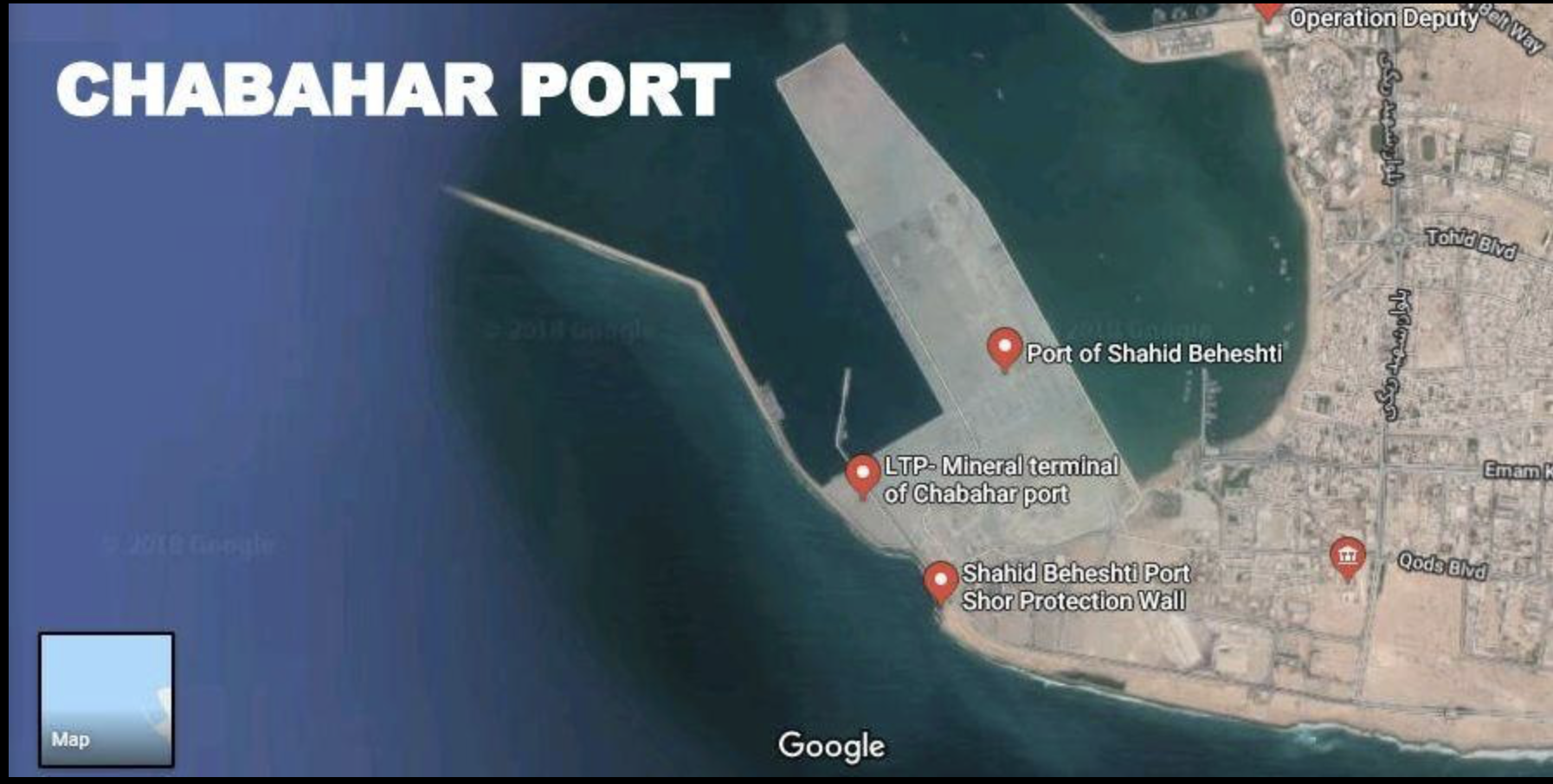
Chabahar is located in southeastern Iran on the Gulf of Oman and is Iran’s only ocean-facing port. This gives it a major advantage over ports located inside the Persian Gulf. According to publicly available geographic and infrastructure data, this positioning allows uninterrupted access to global sea lanes without passing through narrow chokepoints.
More importantly, Chabahar connects directly with the International North-South Transport Corridor (INSTC), a multimodal network that reduces both time and cost of trade significantly.
You can explore a basic overview of the port here:
https://en.wikipedia.org/wiki/Chabahar_Port
Why Chabahar Port India Strategy Matters
1. Strategic Bypass of Pakistan
India has historically faced a structural limitation: no land access to Afghanistan and Central Asia due to Pakistan’s refusal to allow transit.
Chabahar breaks that constraint.
Instead of relying on Pakistani territory, India now uses:
- Sea route to Iran
- Land corridor into Afghanistan
- Extension into Central Asia
This transforms India’s continental connectivity and reduces geopolitical vulnerability.
2. Control Over a Critical Trade Route
The port lies close to the Strait of Hormuz, through which a large portion of global oil trade flows. This location gives India indirect strategic visibility over one of the world’s most sensitive maritime corridors.
From a geopolitical perspective, presence near such chokepoints enhances influence without requiring direct military deployment.
3. Integration with INSTC
The INSTC is a 7,200 km trade corridor linking India with Russia and Europe.
Its advantages are well documented:
- Around 30% cheaper than traditional routes
- Approximately 15 days faster
A recent policy discussion on India’s engagement with this corridor highlights its importance for trade diversification:
https://timesofindia.indiatimes.com/business/india-business/amid-us-iran-war-india-in-talks-with-trump-administration-for-chabahar-port-sanctions-waiver-why-its-important/articleshow/130079217.cms
Chabahar acts as the southern anchor of this network.
Key Statistics and Ground Reality


Data from your report clearly shows measurable progress:
- Cargo grew from 1.22 million tonnes to 2.23 million tonnes
- 82% growth over five years
- Container traffic saw a 600% jump in FY24
- India completed its $120 million equipment investment
- Total cargo handled crossed 8 million tonnes since 2018
These numbers indicate that Chabahar is not a symbolic project. It is operational, scalable, and increasingly relevant.
Chabahar vs Gwadar: Strategic Competition
Chabahar’s significance becomes clearer when compared with Gwadar Port in Pakistan.
- Gwadar is backed by China under the China-Pakistan Economic Corridor (CPEC)
- Chabahar is India’s response
Key differences:
- Chabahar allows direct Afghan access
- Gwadar depends on Pakistan-controlled routes
- Chabahar supports civilian and humanitarian trade
- Gwadar has stronger military and strategic overtones
The rivalry is less about ports and more about regional influence architecture.
The Sanctions Problem Explained
The biggest obstacle to the Chabahar Port India strategy is US sanctions on Iran.
In 2025:
- The sanctions waiver for Chabahar was revoked
- A temporary extension was granted until April 2026
- India used that window to complete financial commitments
A detailed breakdown of this issue can be found here:
https://www.drishtiias.com/daily-updates/daily-news-analysis/us-waiver-ends-on-chabahar-port
This creates a dilemma:
- Continue operations and risk sanctions
- Reduce involvement and risk strategic loss
India cannot fully commit, but it also cannot withdraw.
India’s Tactical Adjustment
Instead of exiting, India has adopted a hybrid strategy:
- Transitioning from direct operator to indirect manager
- Using local Iranian entities to maintain operations
- Retaining ownership of physical infrastructure
- Keeping diplomatic engagement active
This model allows India to:
- Avoid direct sanctions exposure
- Maintain long-term strategic control
- Preserve re-entry options
A policy perspective on this approach is discussed here:
https://www.outlookbusiness.com/economy-and-policy/why-india-may-exit-chabaharand-why-its-not-a-complete-u-turn-walking-away
This is a classic case of geopolitical risk management rather than policy retreat.
Structural Risks and Opportunities
Risks
- Continued US-Iran tensions
- Iran’s internal instability
- China’s expansion via Gwadar
- Operational disruptions in INSTC
Opportunities
- Growing Central Asian demand
- INSTC expansion potential
- India’s rising role in global logistics
- Possibility of future sanctions relief
The strategy operates in a high-risk, high-reward environment.
Human-Centered Strategic Thinking


The Chabahar Port India strategy reflects long-term human decision-making shaped by:
- Diplomacy
- Trade economics
- Strategic foresight
This is not a short-term project. It is part of a multi-decade vision where infrastructure, politics, and economics intersect.
Way Forward
India’s approach going forward is likely to remain cautious but committed.
Short-Term Priorities
- Secure legal safeguards for re-entry into operations
- Continue diplomatic engagement with both the US and Iran
- Maintain minimal operational presence through indirect mechanisms
Medium-Term Strategy
- Strengthen alternative INSTC routes to reduce dependency risks
- Encourage private sector participation in logistics and shipping
- Improve connectivity infrastructure linked to Chabahar
Long-Term Vision
- Full operational return once sanctions ease
- Scale Chabahar into a major Eurasian trade hub
- Integrate it with India’s broader maritime strategy
The key is flexibility. India is not abandoning the project. It is preserving it under constraints.
Final Analysis
The Chabahar Port India strategy represents one of India’s most sophisticated geopolitical investments.
Despite sanctions, uncertainty, and competition:
- Infrastructure is already in place
- Trade volumes are growing
- Strategic relevance remains intact
Chabahar is not just a port. It is a long-term geopolitical asset.
India’s approach shows a clear pattern:
- Avoid confrontation
- Maintain presence
- Wait for the right moment to expand
In global geopolitics, that is often the difference between failure and lasting influence.