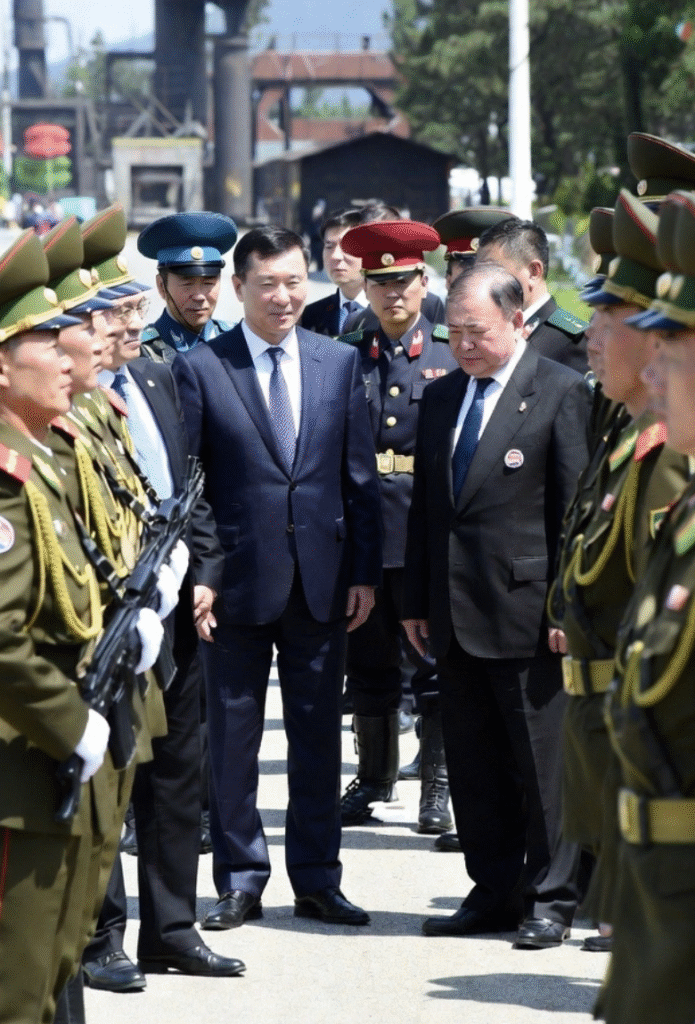
The Russia North Korea alliance 2025 is entering a new and dangerous phase, reshaping regional power balances and drawing global attention. Imagine two weary travellers, long excluded from the banquet, meeting under the midnight sky—no gold exchanged, only a promise of survival.
That image captures the nature of the Russia-North Korea alliance 2025. It’s not glamour—it’s grit. On November 16, 2025, as dawn breaks over icy borders, this partnership is not fading—it’s sharpening. Soldiers clear minefields, workers build drone factories, and deals move through dark corridors.
Let’s trace how this alliance formed, what it means today, and why it should matter to all of us.
Russia North Korea Alliance 2025: From Cold-War Shadows to Modern Strategy
In the 1950s, Soviet pilots flew covert missions over Korean skies while Moscow funneled millions into North Korea’s industrial backbone. But when the Soviet Union collapsed in 1991, trade plummeted from billions to scraps, pushing North Korea into a starvation spiral.
Fast-forward to the 2010s: Russia’s pivot east relied heavily on North Korean labour in Siberia — a quiet but powerful instrument of sanctions evasion.
Then came 2022. Russia’s war in Ukraine forced it to seek new allies. North Korea answered. Beneath the surface, a shaky relationship evolved into a strategic geopolitical alignment.
The Strategic Partnership: The Deal That Changed Everything
On June 18, 2024, the leaders of Russia and North Korea signed a Comprehensive Strategic Partnership. The agreement included:
- Mutual defence hints
- Expanded economic cooperation
- A pledge of “eternal friendship”
- Intelligence and infrastructure support
This wasn’t symbolic — it was a turning point. It transformed a barter-based relationship into full strategic cooperation.
This moment cemented the Russia North Korea alliance 2025 as a core pillar of their shared geopolitical future.
Economics in the Shadows: Labour, Trade and Sanctions Evasion
The economic engine behind this alliance is quiet but powerful:
- Thousands of North Korean workers operate in Russia’s remote regions, sending money back home and bypassing sanctions.
- A major rail upgrade project, set for completion by 2027, aims to multiply trade capacity.
- Both sides benefit: Russia gains labour and logistics; North Korea gains cash, fuel, and access.
Behind these operations lies a simple truth:
The Russia North Korea alliance 2025 is driven as much by economic survival as by military ambition.
Latest Update: November 16, 2025 — Mines, Workers and Weapons
Mines in the West
Russia has acknowledged that North Korean troops are playing a key role in de-mining its western Kursk region following battles with Ukrainian forces. Reports suggest ~14,000 North Korean soldiers were deployed, with casualties exceeding 6,000.
Weapons & Munitions Shift
Ukraine’s intelligence warns that North Korea has reduced its artillery-shell shipments to Russia by more than half in 2025 due to internal shortages. This shift is altering battlefield strategies and supply chains.
Diplomatic Signals
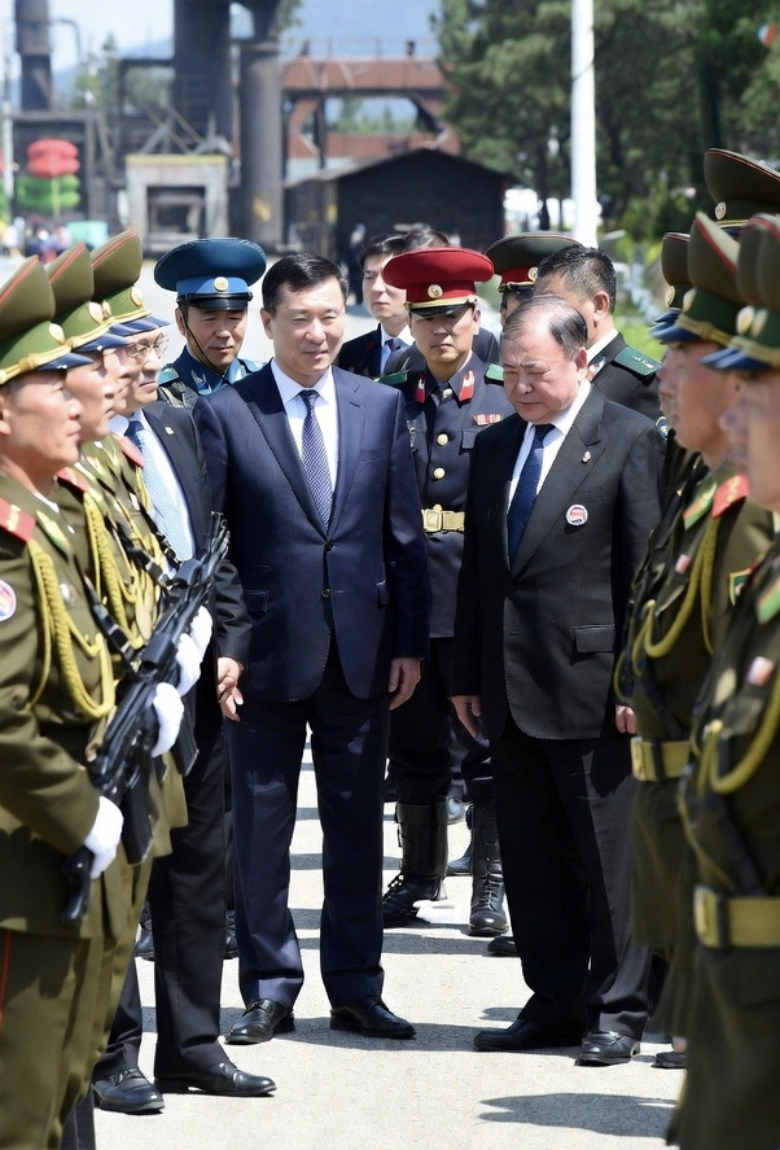
Military delegations met recently in Pyongyang, exploring:
- Expanded troop involvement
- Joint security initiatives
- Infrastructure support
Together, these developments show how the alliance is shifting from quiet cooperation to active conflict support.
Emotional Touch: Two Nations at the Edge, Choosing Each Other
Think about it. Nations often bleed quietly when isolated.
- Russia: facing frozen assets, sanctions, and global isolation
- North Korea: trapped in decades of economic punishment
These two have chosen each other not out of friendship — but out of necessity.
It is a survival pact, forged in desperation.
On a human level, the alliance feels like a story of two outcasts linking arms in a storm — not noble, not heroic, but painfully real.
What This Means For the Wider World
- The alliance signals the erosion of sanctions frameworks: manpower, heavy equipment, infrastructure—moving beyond mere rhetoric.
- In Asia, neighbours are uneasy: South Korea, Japan and others are re-calculating their strategies in light of Moscow-Pyongyang cooperation.
- For the global order: When two isolated states form a deep military and economic bond, their combined power becomes unpredictable—and troubling.
- For many analysts, the Russia North Korea alliance 2025 represents one of the most unpredictable alignments in modern geopolitics.
Conclusion: Outcasts United, But at What Cost?
The Russia-North Korea alliance 2025 is by no means a meeting of equals or heroes—it’s a survival pact between sidelined powers. From Cold War debts to modern battlefield deals, this partnership has matured into a threat vector for the free world. On November 16, 2025, as minefields are cleared and weapons shipments shift, the world watches two pariahs rewrite their role in geopolitics. And the greater question remains: What happens next?