Iran’s latest attack on Israel has raised important questions about Tehran’s evolving deterrence strategy and the future of Middle East security.
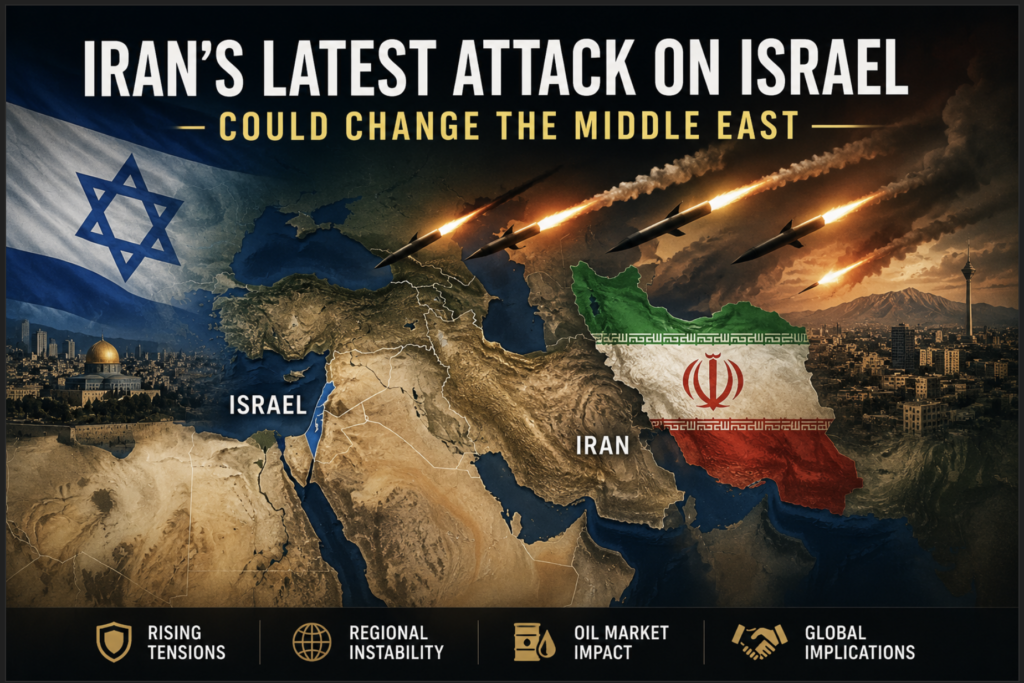
TABLE OF CONTENTS
1. What Iran’s Latest Attack on Israel Means for the Middle East.
2. From Ambiguity to Assertion: Iran’s Evolving Deterrence Doctrine
3. The Strait of Hormuz: The Real Weapon in Iran’s Arsenal
4. India in the Line of Fire: Energy, Diplomacy, and Chabahar
4.1. Energy Security and the Inflation Risk
4.2. India’s Diplomatic Tightrope
4.3. Chabahar Port and the INSTC Under Threat
5. China’s Calculated Silence: Between Trade Routes and Tehran
6. Deterrence or Desperation? The Counter-Argument
7. Can Iran Actually Sustain This? A Military Capability Assessment
8. What the Strike Does to Nuclear Negotiations
9. Israel’s Domestic Pressure: The Other Side of the Deterrence Equation
10. The Human Cost: Life Under the Alert
11. Three Scenarios for What Comes Next
12. Frequently Asked Questions
13. External Authority Links
1. What Iran’s Latest Attack on Israel Means for the Middle East
On June 8, 2026, Iran launched a direct missile strike against northern Israel — its first such operation since an April ceasefire brought a fragile pause to months of escalating regional violence. The Islamic Revolutionary Guard Corps claimed the strike was retaliation for Israeli attacks on Hezbollah-linked targets in the southern suburbs of Beirut in the days prior. The physical damage was limited. The strategic impact was not.
Iran’s deterrence strategy 2026 is being rewritten in real time, and this strike is one of the clearest data points yet. What the missiles struck matters far less than the decision to fire them at all. That decision — authorised at the highest levels of the Iranian regime, taken without direct provocation on Iranian soil, in response to action against a proxy partner — marks a potentially significant evolution in how Tehran defines the triggers for direct force.
For analysts watching the region, the question has never been how much concrete cracked. The more urgent question is what the strike signals about where Iran’s redlines now sit, how its deterrence calculus has shifted, and what that means for everyone from Jerusalem to New Delhi to Beijing.
The short answer: a great deal, and not in ways that fit neatly into existing frameworks.Iran’s Latest Attack on Israel has sparked renewed debate about deterrence, escalation, and regional stability.
2. From Ambiguity to Assertion: Iran’s Evolving Deterrence Doctrine
Iran’s strategic playbook for the past three decades has rested on a foundational principle: stay out of direct confrontation by fighting through others. The IRGC’s network of regional proxies — Hezbollah in Lebanon, the Houthis in Yemen, assorted Shia militias in Iraq and Syria — gave Tehran the ability to project power, extract costs from adversaries, and maintain a comfortable layer of plausible deniability. This was deterrence by proxy, deliberately opaque.
That model served Iran well through years of Israeli strikes on IRGC assets in Syria, covert operations against its nuclear programme, targeted assassinations of senior commanders, and the sustained military pressure that culminated in what Tehran calls the ‘March 2026 campaign’. Iran absorbed losses, occasionally lashed back, and generally avoided the kind of direct confrontation that might trigger a response large enough to threaten the regime itself.
“Tehran is sending a message: attacks on key nodes of its regional network are no longer separate from attacks on Iran itself.”
The June 8 strike breaks that pattern in one critical respect. Iran was not responding to an attack on its own territory. No IRGC base was hit. No Iranian commander was killed. What happened was a series of Israeli strikes on Hezbollah-linked infrastructure in southern Beirut — the kind of operation Israel had conducted dozens of times over the preceding year without triggering a direct Iranian response.
The distinction matters. By choosing to respond directly this time, Tehran is effectively broadening the definition of what constitutes an attack on Iran. The regional network is being folded into the concept of the Iranian strategic core. Attacks on Hezbollah, the argument now seems to be, are attacks on Iran’s deterrence architecture and therefore warrant a response from Iran directly.
Whether this represents an enduring doctrinal shift or a one-off calibrated signal is genuinely uncertain. But the logic being communicated is pointed. Iran appears to be trying to establish a new norm among its adversaries: the era of consequence-free strikes on key proxy partners may be ending. That claim has to be tested against actual Iranian capabilities and willingness to follow through — which is where the analysis gets more complicated.
3. The Strait of Hormuz: The Real Weapon in Iran’s Arsenal
Any serious analysis of Iran’s deterrence strategy has to grapple with the Strait of Hormuz — not as a footnote, but as the central fact. Iran’s missile arsenal is formidable. Its drone production has grown substantially. But neither of those capabilities compares, in terms of global leverage, to Tehran’s ability to disrupt or close the strait that carries roughly 20 percent of the world’s crude oil and around one-third of global liquefied natural gas (LNG) exports.
Approximately 17–18 million barrels of oil pass through the Strait of Hormuz every single day. The countries on the other end of those shipments — China, Japan, South Korea, India, and much of Western Europe — are not parties to the Iran-Israel conflict. But they would bear the consequences of any sustained disruption more immediately than either belligerent.
What a Hormuz Closure Would Actually Mean
A full closure is unlikely in the short term — Iran understands that it would invite a response of a different magnitude, potentially including direct US military intervention to reopen the waterway. But partial disruption, harassment of tanker traffic, mining operations, or even the credible threat of closure is another matter. These tactics require no new capability. Iran has rehearsed them repeatedly.
Even a perceived risk to Hormuz traffic moves oil markets measurably. During the 2019 tanker attack incidents attributed to Iran, insurance premiums for Gulf shipping jumped by several hundred percent within days. A more sustained crisis would push crude prices sharply higher. The Brent benchmark would likely breach levels not seen since the post-COVID commodity spike, depending on escalation duration.
For Asia, which collectively imports the majority of Gulf oil, that is not an abstraction. Japan and South Korea have almost no domestic energy production. Their economies are deeply sensitive to energy price shocks. China has built strategic reserves but cannot decouple from Gulf imports in any realistic near-term scenario. The geopolitical implications of a Hormuz crisis therefore radiate well beyond the Middle East.
Iran’s leadership knows this. The strait is, in a very real sense, Tehran’s most powerful deterrent — not because it can be used, but because every player in the region and beyond has to factor in the possibility that it might be. That implicit threat sits behind every Iranian military signal, including the June 8 strike.
4. India in the Line of Fire: Energy, Diplomacy, and Chabahar
The Iran-Israel conflict is frequently discussed as if it were a bilateral problem with American dimensions. For India, that framing misses something important. New Delhi is not a bystander to this crisis. It has substantial stakes in the outcome — economic, diplomatic, and strategic — and very limited room to manoeuvre. For India, Iran’s Latest Attack on Israel carries significant implications for energy security and diplomacy.
4.1 Energy Security and the Inflation Risk
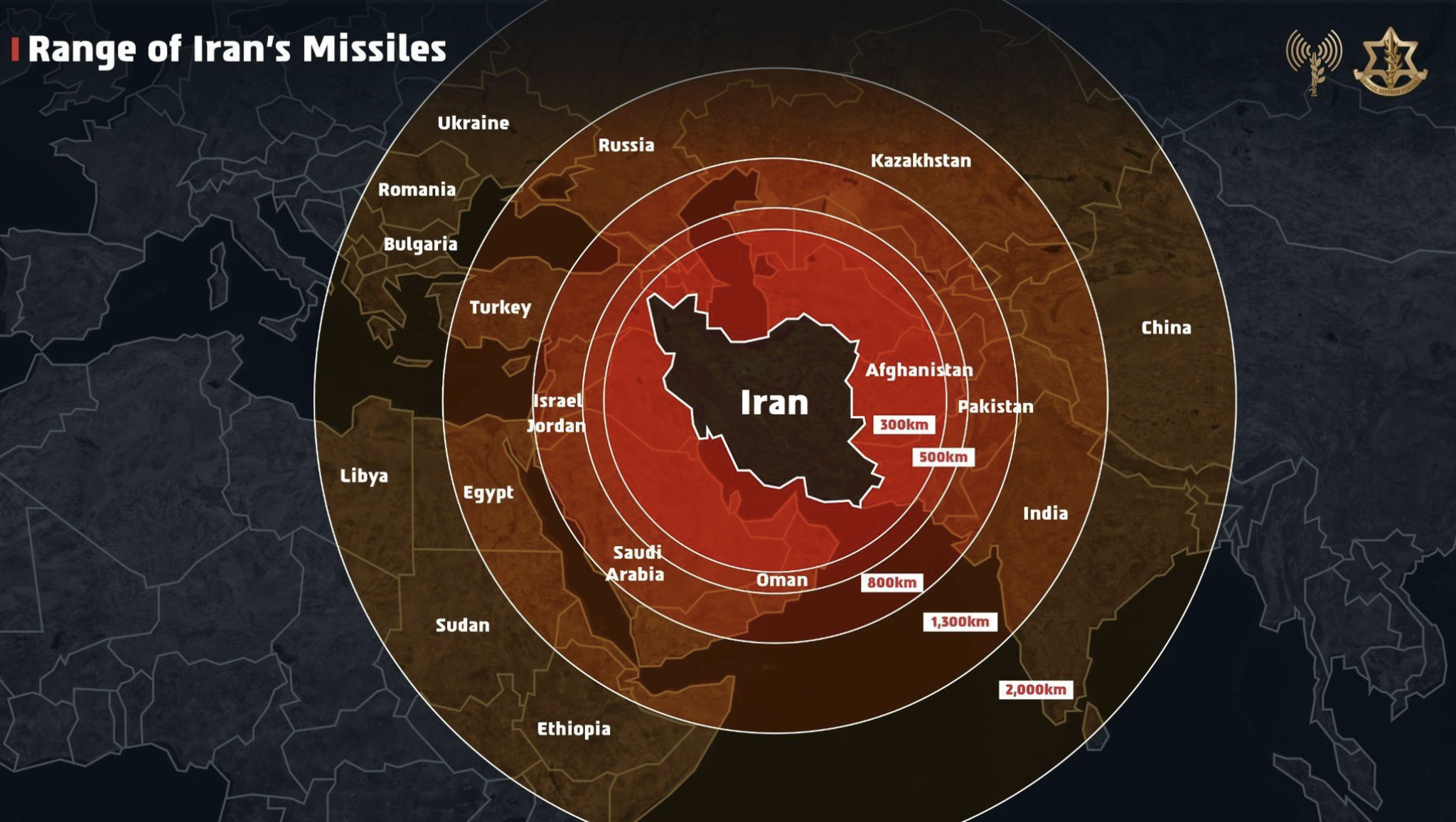
India is one of the world’s largest crude oil importers, consuming roughly 4.5 to 5 million barrels per day and importing more than 85 percent of its requirements. A significant portion of that supply transits the Strait of Hormuz or originates in the Gulf region. Iraq, Saudi Arabia, and the UAE collectively account for a large share of India’s oil import basket.
Any serious escalation involving Iran — one that threatened Hormuz traffic, destabilised Gulf producers, or drove a sustained spike in crude prices — would translate directly into higher fuel costs for Indian consumers, widened trade deficits, inflationary pressure, and potential pressure on the rupee. India’s fiscal space to absorb an energy shock of that magnitude is real but limited, particularly given domestic growth priorities and post-pandemic infrastructure commitments.
Even the current level of conflict, without a full-blown Hormuz crisis, has pushed shipping insurance costs higher and introduced delays on some tanker routes. For a country that is acutely sensitive to fuel price politics — where diesel and petrol retail prices are a visible barometer of government economic management — this matters.
4.2 India’s Diplomatic Tightrope
India’s foreign policy has, for years, been defined by its ability to maintain productive relationships with parties in direct opposition to each other. The Iran-Israel axis is perhaps the most demanding test of that capacity.
India and Israel have developed a substantive defence relationship over the past two decades. Israeli drone technology, surveillance systems, and precision munitions have featured prominently in Indian military procurement. Intelligence cooperation, though not publicly acknowledged, is understood to be significant. The two countries have aligned interests on counterterrorism and regional security architecture.
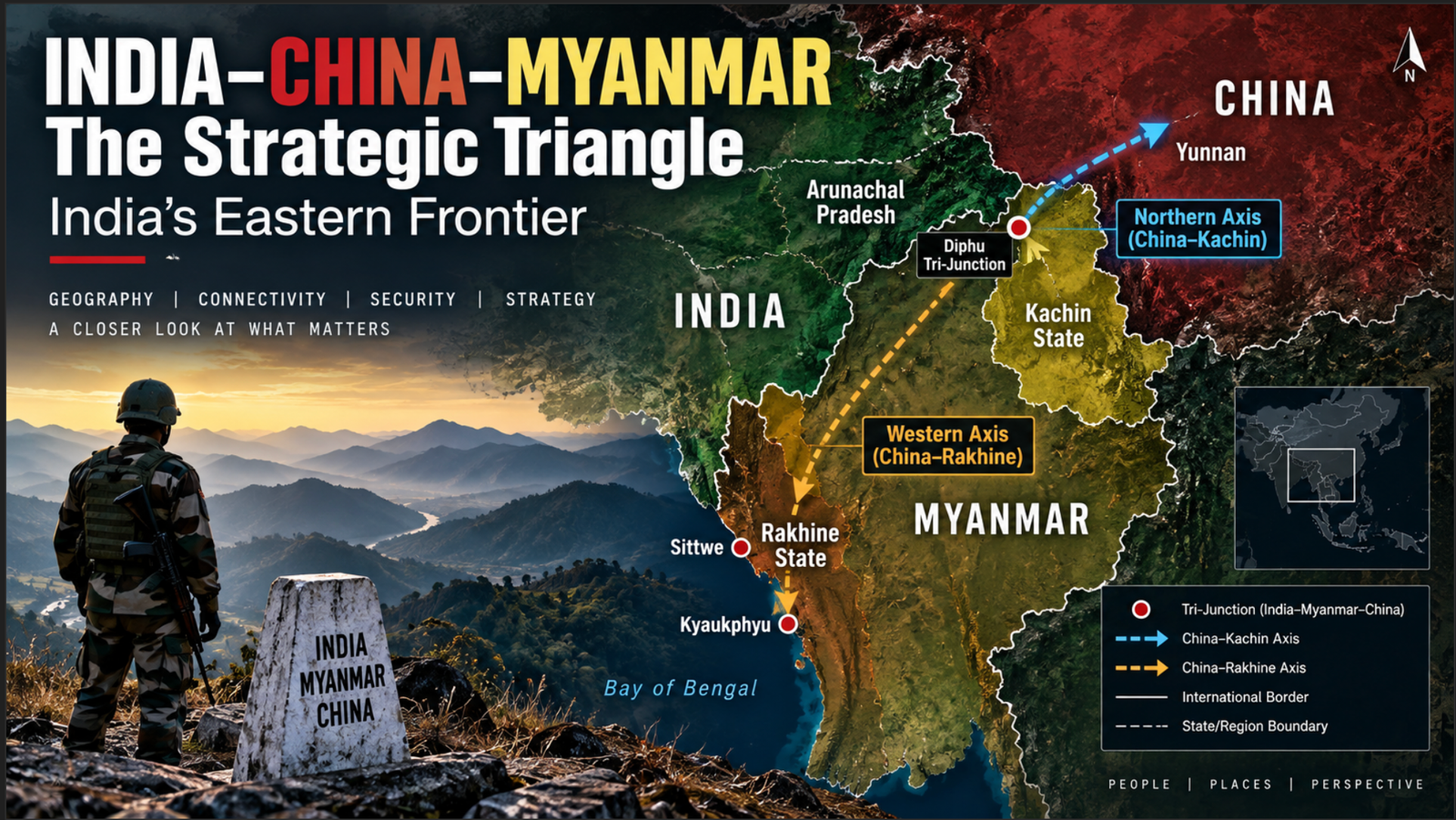
At the same time, India has maintained its traditional ties with Iran. The two countries share historical, civilisational, and strategic connections that date back centuries. More recently, India has invested in the Chabahar port and values Iran as a transit corridor to Afghanistan and Central Asia. India is also careful not to antagonise Iran in ways that could complicate energy procurement or regional connectivity.
Then there are the Gulf states — Saudi Arabia, UAE, Qatar — where approximately 8 to 9 million Indian nationals live and work, remitting roughly 40 billion dollars per year back to India. New Delhi cannot afford to take positions that jeopardise Indian citizens in the Gulf or that strain relationships with Gulf monarchies who are simultaneously building closer ties with both the United States and China.
A significant escalation in the Iran-Israel conflict puts all of these relationships under pressure simultaneously. India cannot openly back Iran without straining its ties with Israel, the US, and the Gulf. It cannot back Israel without damaging its relationship with Tehran and potentially inflaming domestic political sentiment. The traditional Indian response — abstention, studied ambiguity, calls for dialogue — becomes harder to sustain the more acute the crisis becomes.
4.3 Chabahar Port and the INSTC Under Threat
India’s strategic investment in Chabahar port in southeastern Iran is one of New Delhi’s most significant infrastructure diplomacy plays. The port offers India a non-Pakistan route to Afghanistan and onward access to Central Asian markets — an alternative connectivity corridor that bypasses the geopolitical constraints imposed by Islamabad’s control of overland routes.
The International North-South Transport Corridor (INSTC), which links India through Iran to Russia and on to Europe, is central to India’s ambitions as a logistics and trade hub for the wider region. Significant investment has gone into developing this route, and its economic potential is substantial.
A wider conflict centred on Iran would put these investments at serious risk. Chabahar could become inaccessible under conflict conditions or subject to sanctions complications if the US imposes more stringent secondary sanctions on entities doing business in Iran. Indian companies already navigate a complex legal and compliance environment around the Chabahar exemptions. A deteriorating security situation would complicate that environment further.
For Indian strategic planners, the dilemma is acute. The INSTC and Chabahar corridor represent years of diplomatic work and genuine strategic value. Losing that access — or seeing the project stalled indefinitely — is a non-trivial cost. But India’s ability to protect that investment is limited by the trajectory of the wider conflict.
5. China’s Calculated Silence: Between Trade Routes and Tehran
China’s response to the June 8 strike has been, characteristically, minimal in public. A Foreign Ministry spokesperson called for restraint and dialogue. No condemnation of Iran was issued. No explicit support either. That silence is, in itself, a form of communication.
Beijing’s relationship with Tehran has deepened significantly since the two countries signed a 25-year comprehensive cooperation agreement in 2021. China is Iran’s largest oil customer, providing a vital lifeline that has partially offset the effect of Western sanctions. Chinese companies have invested in Iranian oil infrastructure, and the two countries have conducted joint naval exercises in the Gulf of Oman.
From Beijing’s perspective, a deterred and functional Iran serves Chinese interests in several ways. It keeps an alternative energy supplier accessible outside the dollar-denominated international financial system. It complicates American strategic attention by forcing Washington to focus on the Middle East. And it provides China with leverage in broader diplomatic bargaining with the United States.
“Beijing wants a stable enough Iran to supply oil and a disruptive enough Iran to distract Washington — a tension it has not yet resolved.”
But Beijing also has a competing interest in regional stability. The Strait of Hormuz is as vital to China’s economy as it is to anyone else’s, arguably more so given China’s enormous energy consumption. A full-scale conflict that threatens Hormuz traffic would impose immediate and severe economic costs on China — costs that no amount of geopolitical benefit from Iranian deterrence would offset.
This creates a genuine tension at the heart of Chinese strategy. Beijing wants an Iran strong enough to serve as a strategic counterweight to US regional influence, but not so aggressive that it triggers the kind of conflict that disrupts the energy arteries China depends on. Whether those two objectives are compatible in the current environment is far from clear.
China also faces questions about its role in diplomatic de-escalation. If the US-Iran nuclear negotiations collapse — partially as a result of this strike cycle — Beijing may come under pressure to play a more active mediating role. China has traditionally been reluctant to take on that kind of visible diplomatic risk. The evolving crisis may leave it with less room to stay on the sidelines.
6. Deterrence or Desperation? The Case for Iran’s Weakness
The analysis so far has largely engaged with Iran’s strategic logic on its own terms — examining the deterrence narrative Tehran has constructed around the June 8 strike. But there is a competing interpretation that deserves serious attention.
What if the strike is better read as a symptom of weakness than an expression of strength?
Consider the trajectory of Iran’s regional position over the past 18 months. Hezbollah — for decades the most capable and consequential of Iran’s proxy forces — has suffered significant losses in terms of leadership, infrastructure, and operational capacity following the sustained Israeli campaign in southern Lebanon. Iran’s ability to resupply Hezbollah has been degraded. The group’s deterrence credibility vis-à-vis Israel has diminished.
In Yemen, the Houthis have absorbed extensive US and Israeli strikes on missile launch infrastructure and command facilities. Their ability to project force into the wider region has been partly curtailed, even if not eliminated. In Iraq, Shia militia groups have faced increased American military pressure following attacks on US forces.
If the regional network that forms the backbone of Iranian deterrence is under strain, Tehran faces a credibility problem. Inaction in the face of continued Israeli strikes on Hezbollah could be read — by its own allies, by adversaries, and by domestic audiences — as evidence that Iran has been effectively deterred and is no longer willing or able to defend its strategic assets. That would be a far more damaging signal than any single missile strike.
The June 8 operation, on this reading, was not a confident assertion of strength but a defensive move to arrest the erosion of deterrence credibility. The regime felt it had to do something visible to prevent the perception that it had been comprehensively beaten back.
This interpretation changes the analytical picture significantly. It suggests that Iranian escalation may be driven as much by desperation and fear of appearing weak as by strategic confidence. That is a potentially more dangerous dynamic, because regimes feeling cornered and humiliated tend to make riskier decisions than regimes acting from a position of relative security.
7. Can Iran Actually Sustain This? A Military Capability Assessment
Strategy divorced from capability is just rhetoric. The question of whether Iran can sustain its current deterrence posture requires an honest look at what Tehran actually has — and what it doesn’t.
Missile Stockpiles and Drone Production
Iran possesses one of the largest and most diverse ballistic missile arsenals in the Middle East. Estimates from Western defence analysts suggest Iran has several thousand ballistic and cruise missiles of varying range and precision, including the Shahab series, the Fateh family, and the Fattah hypersonic missile — which Tehran claims can evade most existing air defence systems. Domestic production capacity means that stockpile depletion is less of a constraint than it might be for states dependent on foreign suppliers.
Iran’s drone programme has undergone rapid expansion, and the Shahed-series drones have demonstrated operational effectiveness in multiple theatre contexts, including in Ukraine through third-party transfers. Iran has the industrial capacity to produce these systems at scale. The combination of cheap drones and more expensive precision missiles gives Iran a layered strike capability that can saturate air defence systems.
Air Defence Weaknesses
Iran’s own air defence posture is more vulnerable than its offensive capabilities suggest. The country lacks a comprehensive layered air defence system of the kind operated by Israel or Saudi Arabia. Israeli strikes on Iranian air defence installations during the April 2024 exchange exposed specific vulnerabilities. While Iran has subsequently worked to address some of these gaps — including accelerating deployment of Russian-supplied S-300 batteries — the overall architecture remains patchy.
In a prolonged exchange with Israel, Iranian air defence would likely suffer significant degradation early. That does not mean Iran is defenceless, but it does mean that the cost of any sustained direct conflict would be asymmetrically high for Tehran in air domain terms.
Economic Constraints and Sanctions Pressure
Perhaps the most significant constraint on Iranian deterrence sustainability is economic. Decades of sanctions have left the Iranian economy structurally weakened. The rial has lost extraordinary value. Inflation runs at levels that impose genuine hardship on ordinary Iranians. Unemployment among the young is high. The government’s ability to sustain military expenditure while managing these domestic pressures is real but finite.
The IRGC operates significant economic entities that help buffer the impact of international sanctions on defence spending. But that model has its limits. Prolonged conflict carries economic costs that compound existing structural weaknesses. Iran’s leadership has demonstrated a willingness to absorb those costs in pursuit of strategic objectives, but there is a ceiling.
8. What the Strike Does to Nuclear Negotiations
The timing of the June 8 strike relative to ongoing US-Iran diplomatic contacts is the kind of detail that will occupy analysts for years. It was not coincidental. Iran chose to act while talks were in progress — which says something pointed about Tehran’s strategic theory of how diplomacy and military signalling interact. Iran’s Latest Attack on Israel also affects the broader diplomatic environment surrounding nuclear negotiations.
Does the Strike Help Tehran’s Negotiating Position?
The Iranian logic, presumably, is that demonstrating continued capability and willingness to act directly strengthens its hand at the table. The argument would run: the US needs to take Iran seriously as a military actor, not just a sanctions target. Negotiations conducted under the assumption that Iran has been effectively deterred will produce worse outcomes for Tehran than negotiations where Iran retains visible escalatory credibility.
There is historical precedent for this approach. Iran has previously used military signalling — the 2020 ballistic missile strikes on US forces in Iraq following the assassination of Qasem Soleimani, for instance — to establish that it would respond to coercion, even at significant risk to itself.
Or Does It Harden Positions?
The counter-argument is that the strike makes a diplomatic settlement harder, not easier. American domestic politics make it extraordinarily difficult for any administration to conclude a nuclear deal while Iran is conducting direct missile strikes on a key US ally. Congressional opposition to any concessions to Tehran will intensify. Israeli lobbying against a deal will increase. The political space for compromise narrows.
From the Israeli government’s perspective, any nuclear agreement that leaves Iran with meaningful enrichment capacity looks considerably more threatening when accompanied by evidence of Iran’s willingness to use ballistic missiles directly. The argument that Iran cannot be trusted to honour a deal is harder to rebut when Iran is simultaneously launching missiles.
Three Diplomatic Trajectories
The most plausible outcomes from here lie along three paths.
First, a limited diplomatic agreement focused on freezing enrichment in exchange for partial sanctions relief — possible but requiring significant political will on both sides that the current environment is eroding.
Second, a prolonged standoff in which both negotiations and military pressure continue in parallel, with neither side willing to make the concessions required for a breakthrough.
Third, a collapse of the diplomatic track followed by accelerated Iranian nuclear development and a confrontation over that programme — the scenario that most concerns US and Israeli planners.
The June 8 strike does not definitively foreclose any of these paths, but it reduces the probability of the first and increases the probability of the third. That is not a trivial shift.
9. Israel’s Domestic Pressure: The Other Side of the Deterrence Equation
Much of the deterrence analysis in this conflict focuses on Iranian calculations. But deterrence is a two-sided phenomenon, and Israel’s domestic situation is shaping its responses in ways that deserve examination.
A direct Iranian missile strike on Israeli soil creates immediate political pressure on the Israeli government that transcends strategic calculation. Israeli citizens who spent hours in shelters, who heard sirens and watched interceptions in the night sky, expect their government to respond.
The Israeli Defence Forces’ doctrine has consistently held that direct attacks on Israeli territory demand a disproportionate response — not to cause equivalent damage, but to re-establish the credibility of deterrence and signal that the cost of attacking Israel exceeds any tactical benefit.
The retaliatory strikes on Iranian targets — including, significantly, a petrochemical plant — were partly a strategic choice and partly a domestic political imperative. Prime Minister Netanyahu’s government faces a complicated coalition calculus in which hardline coalition partners demand assertive responses to security threats. Being seen to absorb a direct Iranian missile strike without substantial retaliation would carry severe political costs.
But the Israeli government is also aware that its response options carry their own risks. A strike too limited will be dismissed as insufficient. A strike too large risks triggering another Iranian response, dragging the United States into a deeper commitment, and potentially destabilising a region in which Israel has to live permanently. The calibration required is genuinely difficult, made harder by the domestic political environment in which any sign of restraint can be weaponised by political opponents.
What this means is that both sides in this exchange are operating under domestic constraints that push toward continued escalation rather than de-escalation. Iran cannot be seen to back down. Israel cannot be seen to absorb direct attacks. The third party with the most leverage to interrupt that dynamic is the United States — and Washington’s own diplomatic objectives create a complicated incentive structure for how far it is willing to lean into that role.
10. The Human Cost: Life Under the Alert
Behind the strategic analysis are people. In the hours following the June 8 strike, residents across northern Israel — Haifa, Tiberias, Nahariyya, communities in the Galilee — received missile alerts on their phones and had minutes to reach bomb shelters. For some of these communities, particularly those near the Lebanese border, this was not a new experience. It had become a recurring one.
The psychological toll of living under sustained missile threat is cumulative and underappreciated in most geopolitical analysis. Businesses close. Children miss school. Parents spend nights in shelters rather than beds. Agricultural communities in northern Israel have seen seasons disrupted, crops unharvested, and workers unwilling to stay in high-risk areas.
The economic damage from repeated disruption — even without widespread physical destruction — is real and measurable.
In Lebanon, the picture is more acute. Beirut’s southern suburbs have absorbed Israeli strikes repeatedly over the past two years. The population displacement, economic dislocation, and psychological trauma experienced by Lebanese civilians — on all sides of the political divides that run through that country — represent a human cost that gets stripped out of most strategic analysis.
In Iran, too, the economic distress driven by sanctions and mismanagement falls heaviest on ordinary citizens who have no agency over their government’s strategic decisions. The inflation that erodes Iranian purchasing power, the currency that has lost most of its value, the difficulty of accessing medicines and consumer goods — these are the lived experience of Iranian deterrence strategy for the Iranians who have to live with its consequences.
None of this changes the strategic calculus directly. But it is worth remembering that the audiences for these signals are not just foreign ministries and intelligence analysts. They are also civilians in cities who wake up to sirens and wonder whether this is the night things escalate beyond control.
11. What Iran’s Latest Attack on Israel Could Mean Next
Scenario-based thinking is often dismissed as speculation dressed in analytical clothing. But given the number of variables in the current regional situation — diplomatic, military, domestic political, economic — some structured thinking about trajectories is more useful than false certainty in any single direction. The long-term consequences of Iran’s Latest Attack on Israel will depend on how regional actors respond.
| SCENARIO 1: CONTROLLED ESCALATION Both sides continue to exchange limited strikes — Israel targeting Iranian proxies and specific Iranian infrastructure, Iran responding with periodic direct missile attacks calibrated to demonstrate capability without triggering a full-scale war. US diplomacy works to constrain both sides. Nuclear talks continue in parallel, producing no breakthrough but no collapse either. The region remains in a state of managed volatility. Energy markets absorb modest risk premiums. Hormuz stays open. This is the most probable near-term scenario but requires continuous active management from Washington and neither side making a catastrophic miscalculation. |
| SCENARIO 2: PROXY EXPANSION Hezbollah, the Houthis, and Iraqi militia groups all increase operational tempo simultaneously, spreading Israeli military attention across multiple fronts. Iran coordinates this expansion to maximise pressure without itself entering direct confrontation again in the short term. Israel faces difficult choices about where to concentrate force. US forces in the region come under increased pressure. Nuclear talks collapse but no direct Iran-Israel exchange escalates to a major conflict. Energy markets see moderate disruption. Shipping insurance costs rise significantly. India and other energy-dependent economies face meaningful inflationary pressure. |
| SCENARIO 3: REGIONAL WAR A miscalculation — an Iranian strike that kills Israeli civilians in significant numbers, or an Israeli strike that kills senior IRGC leadership inside Iran — triggers a cycle of direct exchanges that neither side can control. Iran activates Hormuz threat posture. Global oil prices spike to 140+ dollars per barrel. US forces engage directly. China faces acute pressure to act as a stabilising force. Gulf states attempt to mediate while managing their own exposure. India faces a severe energy shock with no short-term mitigation available. This scenario remains the least probable but is no longer considered remote by serious analysts. |
What determines which scenario materialises is less the stated strategic intentions of either side and more the quality of decision-making under stress — and whether the mechanisms for communication and de-escalation between Iran and Israel, mediated primarily through the US, hold up under the pressure of the current conflict cycle.
The June 8 strike should not be read as evidence that Iran has recovered its strategic footing. The constraints on Tehran’s power are real and growing. What the strike does suggest is that those constraints have not yet altered the fundamental Iranian conviction that its network of regional influence is existentially important to preserve — and worth paying significant costs to defend.
The line between attacks on Iran’s proxies and attacks on Iran itself is being deliberately blurred by Tehran, introducing new variables into an already complex deterrence equation. How Israel, the United States, India, China, and the wider international community respond to that blurring will shape the trajectory of Middle East security for years to come. The answers are not obvious, and the decisions required will not be comfortable. Ultimately, Iran’s Latest Attack on Israel may be remembered more for its strategic signaling than its military impact.
12. Frequently Asked Questions
Q1. What was Iran’s stated reason for the June 8, 2026 missile strike?
Iran described the operation as retaliation for Israeli airstrikes on Hezbollah-linked targets in the southern suburbs of Beirut conducted in the days prior to the attack. The IRGC framed it as a defensive response to what it characterised as aggression against Iran’s regional partners.
Q2. How does this strike differ from Iran’s previous direct attacks on Israel?
The critical difference is that Iran was not responding to an attack on its own territory, military forces, or leadership. Previous direct strikes — including the April 2024 drone and missile operation — came after Israeli attacks on Iranian assets in Syria. The June 8 operation was triggered by Israeli action against a proxy partner, suggesting an expansion of Tehran’s redlines.
Q3. How does Iran’s deterrence strategy 2026 affect India specifically?
India faces exposure on multiple fronts: higher crude oil prices and shipping costs if Hormuz is threatened; diplomatic strain from competing relationships with Israel, Iran, the Gulf states, and the US; and potential disruption to the Chabahar port and INSTC corridor, which are central to India’s regional connectivity strategy.
Q4. Could Iran actually close the Strait of Hormuz?
A full closure is unlikely because it would invite a large-scale US military response. However, Iran has demonstrated the capacity to harass tanker traffic, conduct mining operations, and threaten shipping in ways that raise insurance costs and create market uncertainty without constituting an outright closure. That partial disruption capability is itself a significant deterrent tool.
Q5. Does the strike strengthen or weaken Iran’s position in nuclear negotiations?
The answer is contested. From Tehran’s perspective, the strike demonstrates continued capability and resolve, potentially improving its leverage. From Washington’s and Jerusalem’s perspective, the strike makes domestic political support for any concessions to Iran harder to maintain, reducing the space for a deal.
Q6. What is China’s role in this crisis?
China has been publicly restrained but is deeply invested in the outcome. As Iran’s largest oil customer and a significant trade partner, Beijing wants a functional Iran. But as a major Hormuz-dependent energy importer, it also fears the consequences of sustained conflict. China may face increasing pressure to play an active diplomatic role if the US-Iran track collapses.
Q7. Is Iran acting from a position of strength or weakness?
This is genuinely debated among serious analysts. The orthodox deterrence reading suggests calibrated strength. The counter-argument — that the strike reflects the erosion of proxy network credibility and a regime feeling pressured to act to avoid appearing defeated — is at least as plausible. Both possibilities have different implications for what comes next.
Q8. What does this mean for the risk of a broader regional war?
The probability of full-scale regional war has increased relative to 18 months ago, though it remains below 50 percent in most assessments. The primary risk is not deliberate strategic choice but miscalculation — a strike that goes further than intended, an accidental civilian casualty event, or a communication breakdown that removes the de-escalation off-ramps both sides nominally prefer.
13. External Authority Links
The following authoritative external sources are been refered.
Geopolitical & Strategic Analysis
• International Crisis Group — Middle East Reports: https://www.crisisgroup.org/middle-east-north-africa
• IISS — The Military Balance and Iran analysis: https://www.iiss.org/research-areas/middle-east
• Brookings Institution — Center for Middle East Policy: https://www.brookings.edu/center/center-for-middle-east-policy/
• Carnegie Endowment — Iran Research: https://carnegieendowment.org/topics/iran
Energy & Hormuz Data
• US Energy Information Administration — Strait of Hormuz Factsheet: https://www.eia.gov/international/analysis/special-topics/World_Oil_Transit_Chokepoints
• IEA — Oil Market Report: https://www.iea.org/reports/oil-market-report
• S&P Global Platts — Middle East Energy Coverage: https://www.spglobal.com/commodityinsights/en/market-insights/latest-news/oil
India-Specific Sources
• Ministry of Petroleum and Natural Gas — India Oil Import Data: https://petroleum.nic.in/content/crude-oil-imports
• Observer Research Foundation — Chabahar and INSTC Analysis: https://www.orfonline.org/research-areas/strategic-studies
• Institute for Defence Studies and Analyses (IDSA): https://idsa.in/issuebrief
Nuclear Negotiations
• Arms Control Association — Iran Nuclear Coverage: https://www.armscontrol.org/factsheets/irandisp
• Stimson Center — Middle East Security Programme: https://www.stimson.org/programs/middle-east/